
Avis de non-responsabilité : This post is for informational and educational purposes only and does not constitute medical advice, diagnosis, or treatment. Always consult with a licensed physician or psychiatrist before considering a psychedelic retreat or making any changes to your medication or health regimen.
If you’ve been exploring the idea of joining a psilocybin retreat in the Netherlands, you’ve surely come across countless accounts of life-changing stories. But you might also have questions, especially if you’re taking medication or managing a mental health condition.
At Evolute Institute, we believe that transformation begins with clarity and safety. Understanding how psilocybin interacts with your unique physiology – including your physical health, current medications, and mental well-being – is an essential part of deciding whether a retreat is right for you.
Psilocybin and Medication Interactions
Psilocybin interacts with serotonin receptors in the brain, the same system affected by many antidepressants and other psychiatric medications. When combined, the effects can vary widely:
- The psilocybin experience may be significantly muted or “blocked”
- There’s a small but real risk of unpleasant physiological or emotional reactions
- Certain combinations may disrupt emotional integration, which is central to the therapeutic process.
For these reasons, we carefully review every participant’s medical and mental health background before confirming participation. If you want to learn more about medications and psychedelics interactions, you can read our article: “the ultimate guide to psilocybin and its potential interactions with antidepressants and other psychiatric drugs”.
Medications That Require Careful Consideration
If you are currently taking any of the following, it’s essential to discuss them during your confidential intake screening:
- SSRIs or SNRIs (e.g., sertraline, escitalopram, venlafaxine) [1]
- MAOIs (monoamine oxidase inhibitors) [2]
- Antipsychotics and mood stabilizers (e.g., lithium, risperidone) [1]
- Benzodiazepines (e.g., Xanax, Valium, Lorazepam) [1]
- Stimulants (e.g., ADHD medication like Adderall or Ritalin) [2]
Important: Never stop or change your medication without consulting your healthcare provider. If you’re interested in a psilocybin retreat, we’ll guide you through a safe and respectful process to explore your options.
Psychological Risks: Who Should Avoid Psilocybin?
While psilocybin has shown promise in clinical research for depression, anxiety, and trauma, retreat settings differ from clinical trials. Clinical studies are conducted under strict protocols, structured therapeutic frameworks, and extensive follow-up. In contrast, retreat environments, while safe and supportive, cannot replicate the same level of clinical control.
In our blog, “Psychedelic Therapy vs. Psychedelic Retreat,” you’ll find valuable insights to help determine if a psilocybin retreat is a good fit for you. It’s important to note that retreats are not a substitute for clinical treatment and are not intended to address or treat diagnosed mental health conditions. Instead, retreats are designed for personal growth and self-exploration rather than therapeutic intervention.
Safety is our top priority, and some mental health conditions can increase the risk of destabilization during or after a psychedelic experience. For this reason, we generally do not recommend psilocybin retreats for individuals who currently experience:
- Psychosis or a history of psychotic episodes (including schizophrenia or schizoaffective disorder) [3]
- Bipolar disorder type I (due to potential risk of triggering mania) [4]
- Severe personality disorders that affect emotional regulation or interpersonal stability [5]
- Active suicidal thoughts or self-harming behavior
- Acute trauma, PTSD flare-ups, or recent major emotional crisis
If you see yourself in this list, please don’t feel discouraged or excluded. It simply suggests that your current situation might require a different level of care than a retreat can provide. Your safety is our absolute priority. If a retreat isn’t the safest container for you today, our team is here to offer honest, compassionate guidance on other therapeutic avenues that can support you right where you are.
Absolute Contraindications and Exclusion Criteria
Certain conditions and circumstances make participation in a psilocybin retreat unsafe. These are considered absolute contraindications, meaning attending could pose serious risks to your physical or mental health [6]. If any of the following apply to you, it’s essential to prioritize safety and explore other inner work options:
Condition / Context | Reasoning / Mechanism |
Epilepsy / Seizure History | Psilocybin lowers the seizure threshold. The intense hyper-connectivity in the brain can trigger grand mal seizures in susceptible individuals, even if they have been seizure-free for some time. |
Severe Heart Conditions | Psilocybin acts as a vasoconstrictor (tightens blood vessels) and increases heart rate. This places “exercise-level” stress on the heart while the body is stationary, which is dangerous for those with coronary artery disease or arrhythmias. |
Uncontrolled Hypertension | Psilocybin causes a transient spike in blood pressure. |
Pregnancy / Breastfeeding | Psilocybin crosses the placental barrier. There is insufficient safety data regarding how intense neuroplasticity agents affect fetal brain development, making the potential for developmental harm unknown. |
Severe Renal (Kidney) or Liver Failure | The kidneys and liver are responsible for metabolizing and excreting the substance. If organ function is significantly compromised, psilocybin may remain in the system unpredictably long. |
Under Age 21 | The prefrontal cortex is still in a critical stage of development and pruning. Introducing potent neuroplastic agents during this window may interfere with natural brain maturation. |
When a Psilocybin Retreat Might Be Right for You
In contrast, good reasons to consider a psilocybin retreat are when you arrive with questions about your patterns, growth, and purpose. Many participants want to break unhealthy habits of mind, such as self-criticism, perfectionism, or fear of failure, that limit authenticity and fulfillment.
Others seek to expand creativity and cognitive flexibility, opening pathways for fresh ideas and innovative thinking. Some are drawn to enhance emotional intelligence and self-awareness, cultivating compassion, self-acceptance, and stronger relationships. And for many, the focus is on purpose-driven connection, rediscovering meaning, values, and a sense of unity with themselves, others, and the world.
A psilocybin retreat might be a good fit if you’re wondering:
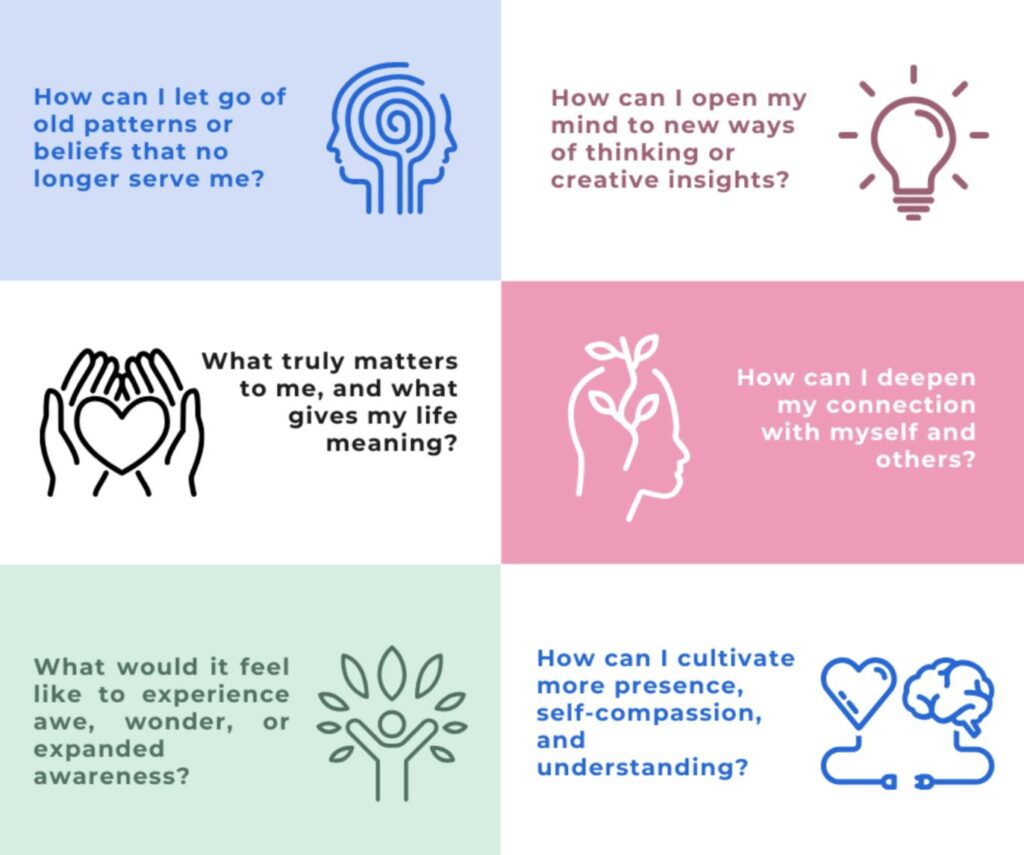
In a safe and supportive retreat setting, psilocybin provides a container to explore these questions deeply, offering clarity, insight, and opportunities for lasting personal transformation. If your question feels different or unique to your situation, you can schedule a call with us to discuss it directly, ensuring you get guidance tailored to your intentions and needs.
A psilocybin retreat can be a profound opportunity for personal growth and self-discovery, but its transformative potential is unlocked only when approached with readiness, stability, and intention. Being in a grounded mental and physical state, having a willingness to explore deep psychological and emotional material, and valuing reflection and integration are all key to getting the most from the experience.

How Evolute Ensures Safety
At Evolute Institute, every participant goes through a confidential screening call with one of our medical doctors and also a psychiatric evaluation. These conversations are designed to understand each individual’s medical history, medications, and emotional landscape – not as a test, but as a way to ensure readiness and suitability for the experience.
Moreover, medical oversight is integrated into the retreat structure, providing participants with the confidence to fully engage in the inner work, knowing that physical safety is monitored.
If psilocybin isn’t suitable for you right now, we’ll help you find clarity and direction.
Your Next Step: Book a Call
If you’re curious but unsure, we invite you to start with a conversation with us. This is your space to ask questions, and receive personalized guidance about whether a psilocybin retreat in the Netherlands is a safe and meaningful next step.
You’ll leave the conversation with clarity, no pressure, no judgment, just honest insight.
A psilocybin retreat can be a profound catalyst for healing, but it is a journey that asks for deep respect and preparation. Because psilocybin enters into a direct conversation with your body’s chemistry, understanding how it interacts with any daily medications you take is vital. If you are currently using pharmaceutical support or navigating complex mental health challenges, looking honestly at these factors is not a barrier, it is the most powerful way to honor your process and ensure your safety.