
Maj Seider
The Leadership Mistake High Achievers Don't Realize They're Making
Episode Summary
For years, Maj believed leadership meant performing, delivering, and demonstrating capability. But beneath the achievements were stomach aches, pressure, damaged relationships, and the exhausting pursuit of proving herself. In this conversation, she shares how repeated transitions taught her that leadership isn't about becoming indispensable — it's about creating spaces where others can flourish.
Resources Mentioned
People Mentioned
Maj (00:01) If I look at the time I invested in those different spaces of myself, I was more busy with the perception of others. How do I deliver? How do I perform? Will I be successful? What do I need to achieve here to show that I can do this? Let me show that I can do this. I think today it's a different thing. I do know that that side of performance comes with also being a very strong, stable person who is there for a bigger intention, not just yourself, but you have to hold on to yourself to do that for the bigger group.
Christopher (00:46) You're listening to Inner Pioneers, a podcast for curious minds who want to understand how to navigate change, crises, or simply the call for something new. Join us as we dive into real stories of transformation and learn from leading voices in psychology, science, and human development how to move through inner shifts and seasons of change. I'm Christopher Kabakis, and now let's begin pioneering.
Christopher Kabakis (01:15) Today's guest is Maj Seider, partner at the B Corp-certified transformation company LEAD Forward, and co-founder of Beyønd, a newly established ecosystem-driven company dedicated to cultivating future-ready leadership. As you will realize from our conversation, Maj has helped countless leaders from many different organizations in different sectors to navigate transformation. But beneath the frameworks and methodologies lies her personal story — a story of ambition and of self-doubt, of learning through mistakes and of discovering what leadership is all about. So let's dive right in and enjoy our conversation.
Christopher Kabakis (01:53) Welcome everybody — super excited to have with us today Maj Seider. Maj, you're Danish by background, Danish and British, you told me before. But you have been living in Germany for 15 years now in different locations — Hamburg, Berlin, and Nuremberg currently. And you have a lot of leadership and management experience: Vestas Wind Systems, a Danish company, then GfK, and then at LEAD Forward for six years. So lots of experience. And of course, we are always interested in transition moments and turning points in people's lives. So let me ask you right away a big question: what were the major turning points in your life as a leader, as an entrepreneur, as a consultant? And what have you learned from them?
Maj (02:51) Thank you for the introduction, and also thank you for this quite big opening question. I need to think about where to start. I think professionally, coming out of university and starting back then at Vestas Systems, I was incredibly lucky to already be exposed to a lot of very challenging tasks from day one. I am, I've heard from a few people, an energetic, fast-moving person. So coming out and first learning that — wow, it's actually not possible to be that fast when you don't know it all. When there's a big new unknown space to navigate, not only from a professional perspective but also from a global perspective, coming out of your little local country cocoon and into a big world of interaction and cultural differences. I think that very early started shaping an understanding of a big world of complexity that we are in, and that has shaped me a lot.
Maj (05:28) I think those very early exposures to this: OK, I need to step into this, I just need to be patient with myself and take the time to learn, and I will figure it out — that shaped me a lot as a leader. Because when that shift then came and my first leadership role arrived, it was another big life transition, because I was asked if I would take a job outside Denmark. So that was actually when I moved to Germany. Not only did I take up a leadership role for the first time — I also moved to a new country. I took a team of more than 10 people in that first role, and they were not only based in Germany but also in Poland. And I was taking over an area that had to be established: somehow there, but quite fresh, with no standards, processes, or tracking in place.
Maj (06:21) This notion of — they speak English, it's all in English, it's international here, but I don't actually understand what they're saying — that could make me feel very uncomfortable. But at that point I also knew: let's just start looking into what this is about. Let's be curious. Let's ask questions. Let me explore and learn from these colleagues. I bet if I tell them I don't know what something means, they will take the time to explain. And of course that was also what happened. So after three or four months, I also "spoke quality," so to say, and could navigate in that environment.
Christopher Kabakis (09:04) It sounds like your first leadership position experiences were an ideal preparation for the consulting role — because when you're always thrown into the unknown and don't know anything about the context, you need to be curious and, as you said, also patient, and learn very quickly how to navigate in a new environment. And of course any consultant coming to a client is in that position. So I feel like these initial leadership positions were a great preparation for the consulting role later.
Maj (09:30) Yeah. I think my whole 12 years in corporate environments has shaped me a lot as a consultant, and has given me the best position to be in this role today. First of all, from exactly what you just said — what is also the life of a leader in those organizational systems? What does it feel like? Not only what does it look like on paper? But also understanding these organizational dynamics and what is possible and what is difficult and what is impossible. And then at my time at GfK, where I was holding a big role in an organizational transformation — my role was in the company strategy to lead the future culture — that became an even bigger unknown, but also one where I couldn't really learn just from looking at other people and what they do. When you work with culture, you actually need to somehow shape it and shape the agenda and figure out what good will look like in a completely different way. There is no recipe.
Maj (11:41) Engaged with the bigger system to figure out what is right and wrong, what is the right approach, how does it connect to strategy, and how do I actually activate it. I'm just the one person with a team — a great team — but we need the whole world here to become active.
Christopher Kabakis (11:58) Yeah, and what I hear is also a transition to real ownership and thinking beyond the definition of whatever your job profile says. But it's also the story of moving from management to leadership. Management is more the technical aspect — how to do it right, all the things you can learn from others. But the leadership role is really stepping into the unknown. There is no defined path. I need to create a path for me and for the organization. And then I need to hold much more tension. Before you said something really interesting: there were three levels — how do I hold myself; what do I show to others; and what does the system want? All of those levels create tensions and you need to be able to hold and navigate them. This is really leadership.
Maj (13:16) Yeah. I said in the very beginning: this idea of keep maturing as an adult — this is exactly what it is. In my first leadership role, if I think back, I can put those words on it now. But as myself at 30 years old, just moving to a new country and doing all of that, I was not aware of it. I was not so aware of what's inside myself, what is in my head, what is in my belly, what is in my heart — what people expect from me and how does that fit together? Today, I think that's the big difference. So many years later as a leader, I do recognize that that is a thing you need to spend time on — all of it.
Maj (14:26) Probably in my younger self, I was busier — if I look at the time I invested in those different spaces of myself — with the perception of others. How do I deliver? How do I perform? Will I be successful? What do I need to achieve here to show that I can do this? I think today it's a different thing. I do know that that side of performance comes with also being a very strong, stable person who is there for a bigger intention, not just yourself, but you have to hold on to yourself to do that for the bigger group.
Maj (15:24) I've also felt that sometimes there's a bit of a corporate misfit — that maybe I'm too entrepreneurial in some pockets to fit a long-term role, and maybe my energies are better used in a broader context in this world. So maybe I should go into consulting of some kind. And that's when I made the shift to LEAD Forward. That was again a complete new learning journey that started six years ago, where I could luckily build a lot on the corporate background, but also all of a sudden being exposed to NGO work, startups, scale-ups — a lot of them in Berlin — and also public organizations. All of a sudden that was just a whole new pocket of the unknown opening up. Plus, of course, operating a smaller organization means involvement in everything.
Maj (16:54) Leadership all of a sudden also is managing budgets — the top budget ownership. You shape culture completely from end to end of what you want and what you believe is right. You try your best, you look for people who fit that to join you. You need to think about how do we really bring this brand alive out there? How do we stay true to ourselves? What is the right way of thinking about utilization of client time versus internal? That's a lot, a lot of new questions that you need to start engaging with. So that was the next chapter — with a lot of new unknowns and stepping into those.
Christopher Kabakis (17:46) And we talked a bit about your vision when you came to LEAD Forward in this kind of ownership, entrepreneurial mindset — really putting yourself into the organization as it grows, shaping everything: budgets, public perception, culture internally. How did you shape the vision? And maybe also — I noticed on social media there's creativity, playfulness. Those things are very important to work co-creatively. Maybe you can tell us a little more about this unique approach that also defines how you do consulting.
Maj (18:37) Yeah. I think what I always experienced in corporate contexts was always wondering a little bit — why is it often in those systems that we act and think so differently than when we are in our everyday lives out there? Why don't we just become a little bit more pragmatic and conversation-driven? Why do we need so many PowerPoints to explain something that maybe just could sit in a conversation and an agreement? This pragmatism, I think, is probably also one of the things I stand very strong for. But it does involve a lot of interaction on the human side — engagement with opinions in the systems, and not just sitting and shaping words on paper.
Maj (21:01) Yeah, absolutely. But I think it's really a matter of when you bring out playfulness and how you do it. Probably the first thing doesn't have to be that playful — you almost need to build a bit of a trust level to be able to do that. I can give you one example. If you do intense team days as leadership teams — you discuss strategy, you figure out how to do things together — there is a bit of playful needed to light up the energy in the room. And I think in many cases you can do many funny things, but I like to do things that also bring the open-heartedness into play. So one thing that I have done with leadership teams — and very, very senior leadership teams — is something I call a feedback cocktail bar.
Maj (22:57) I basically bring little cocktail shakers — little bright green ones. I bring non-alcoholic and alcoholic ingredients if the context allows, and mint and lime and different little syrups. And I line it up like a beautiful little bar. Then I give these different ingredients different human qualities: friendly, kind, caring, generous — that kind of thing. I give the lemons maybe "care." And I ask the leaders to look at all of these ingredients and then I team them up two by two, and they have to shake a cocktail for each other, serve it in a glass, and tell them why that feedback cocktail has the ingredients it has. So it's an example of something that is of course really funny. But when you go back to your little table to serve the cocktail for each other, the conversation actually gets very serious — because it's a moment of human relationship, building relational trust, feedback to each other that we might not normally spend so much time on. So that's one little example of how playfulness is not just fun; it always has a deeper intention.
Christopher Kabakis (24:13) So in this way, you role-model also a new form of leadership for the leaders in the organization. The spirit you bring and the way you interact with them and the groups will hopefully also inspire the leaders to incorporate more of that spirit into their daily practice. And so how do you think about the old or traditional ways of leadership versus the new ways that maybe you also embody?
Maj (24:42) Yeah. I do think we as leaders really have a big obligation to create space in general. And I think we only do that if we dare to remove ourselves from our screens and our PowerPoints. Not that space cannot be created digitally — of course it can — but the space we need to foster is a space where we recognize that no one in this world right now, moving fast and facing new challenges, is alone in that. And we have a lot of crisis in the world to deal with. So I think leaders really need to recognize that it's not about me anymore. My role as a leader is the we, or the us even. I'm here for a much, much bigger intention.
Maj (25:39) Especially when you're in senior leadership roles where you have responsibility of something that is large in scale. This courage to step away from my feeling of "I have to prove, I need to perform in this specific way" — and leveling yourself a lot more as a leader, to take a few steps back and actually somehow be the one who shapes the space for the bigger group — making sense together, building trust between each other, and figuring out how to actually deliver things without being too complex. I think that's what many leaders struggle with and need to find courage to do more of.
Christopher Kabakis (26:52) Yeah. Leadership as space-holding, or space-creating — I love this metaphor. It's very rich. There's a famous TED Talk by Benjamin Zander where he says: I did this work for 20 years and it struck me at some point — the conductor doesn't make a sound. He depends for his power on actually making the others play well together. So I don't make a sound. I'm not the hero. And that maybe speaks to what you were saying — going from I to we, from IQ to EQ, from individual intelligence to collective intelligence, creating a space where the system can unfold differently.
Maj (27:46) I think it is, no matter what, a recognition of: what is my real role here, who am I here for, and how am I here? And that it's again what I said before — the conductor would also make it less about him or herself. It's about the bigger group. This is it. And I think probably many people listening now will think: hey, easier said than done. True. It's really difficult, because there is a lot of speed expectation and there is a lot of work delivery expectation. But I do think leaders who don't find a way to do both slow and fast have a difficult time. If you don't manage to step away from fast and create slow — slow spaces, relationship building moments, team cohesion moments, team clarity and alignment moments — you can't be fast. That's the thing. You can look fast, it can look like we do a lot, but what comes out in the other end is not fast. It's clumsy and often not the best results.
Christopher Kabakis (29:21) Yes, yes. So there are lots of contradictions in the demands facing leaders — paradoxes, as you say, and tensions that are being created within us and between us and the outside world. Fast versus slow. Top down versus bottom up. Should be a clear leader, give direction, and yet also invite participation. Focus on quarterly results but also invest for the long term. And with AI now supercharging many exponential curves — how do you help people to cultivate the necessary capacities for this new time? And what do they need to unlearn?
Maj (30:33) Yeah. And I think right now — that question is so good — especially with the whole AI wave coming in. One thing I definitely see is that leaders really need to take responsibility around critical thinking. Not only critical thinking about their work, but about what is AI to us — where and how does it make sense, and when we introduce it, how can I critically look at what works and what doesn't? And what we do with leaders in the spaces of critical thinking, forward-moving thinking — how am I operating my role as a leader best possible in the paradoxes that are a part of our everyday life — is that we bring a lot of attention to those topics. What are the power dynamics I'm a part of? Let's talk about it. What are the patterns of how we make decisions and how am I a part of it or how can I influence it differently? It's again to create proper space for that and to activate the wisdom in the room around it.
Christopher Kabakis (33:13) Yeah. That totally speaks to me — creating spaces for individual and collective sense-making, reflection and dialogue. Through this we see we are not alone in navigating these tensions and paradoxes as leaders. We are together in this and we bring transparency to it. And also then a shared understanding and a collective buy-in — including those things that are often completely under the hood, like the power dynamics. Because I can have all the greatest ideas about what to do and how leadership should look like, but if there are certain stakeholders who have extraordinary influence, then I need some safety for it. And as you said, people feel like: I need to perform, I need to show that I can do it. What am I measured against? How do you deal with the difficulty of power dynamics in these situations?
Maj (34:24) Yeah. I think bringing attention to the facts as they are is important. A lot of organizations don't talk about these difficulties. It doesn't even have to be a negative thing — it's just a fact of how the organization is steered. What we can help the leaders with — and this comes back to the idea of fast or slow — is: what can we expect to change overnight? It's not a lot. But what can we somehow shape a personal or collective aspiration to influence? When we have leaders together in a space who might want to try to influence something for the better — how do we politically navigate that together? It's not fighting the system. The system is the system. It's working with the system and its politics and its power dynamics, but still trying and not giving up.
Maj (34:43) So it's often about finding allies in the system. It's about daring to take the conversation with the stakeholders. I think there's a weird thing with hierarchies happening — people think that even shareholders or top boards are not open for conversation. I absolutely think they are. I've never seen anything different. Who is it in my system who thinks similarly in top leadership, who has good connections to the board members, the shareholders — whoever has the most power? And how do we get ourselves to the table for that conversation and dare to do that? It sounds simple, but it is not, because it is steered by power and politics. And it's often a question about: not what is important tomorrow, but what is the legacy that you hope to stand for later in life?
Christopher Kabakis (38:12) Yeah. I think exactly as you say — retreats, getting off-site, already just by slowing down, things come up that are stirring in you. You realize more what your values are. And in those interactions, a new clarity can emerge and a new resolve can be found. Then often we haven't realized that we were in an unconscious fear dynamic in power relations. But then when we talk about it, suddenly we can collectively say: OK, I think there's a case here. People can assemble their courage and say: let's do this, let's talk to the board. Engage in a conversation. Which is also your approach very much — engaging with people in conversations and interaction, not being afraid, putting yourself out there and having the right balance of seriousness and playfulness to do it. It's almost like a dance. And as Konrad Adenauer said: politics is the art of the possible. And of course every culture transformation is like the art of the possible.
Maj (40:46) And if we turn it inwards again — to what's going on inside me — because I'm out there now with my team, with expectations, and doing all of this as leaders, there are moments where we have massive successes. And then there's also the opposite. I think any leader, including myself, has really burned their fingers — doing really stupid things for the sake of my ambition or my plan. So when we burn our fingers, do we take enough time to integrate what happened? What do I learn from it? How will I do it differently in the future? Why did I feel like I burned my hands? Is it because I hurt people? Because I didn't achieve what I wanted? Because I failed delivering? What happened here? So this art of creating space to properly integrate and make sense — that, I think, is the individual side of it.
Maj (41:13) And what we do with groups of leaders is also try to create spaces where even those more sensitive topics can be shared — typically not in the bigger groups, but in smaller groups of group coaching or even one-on-one. Because leaders are actually able to help each other a lot more than they are often aware of. So there's help coming to me: I felt heard and seen. And it was not so different from how my peers have burned their fingers in the past. It's a part of life. Let me be resilient around when it happens, because it will happen again, and I don't have to be so afraid of it. I'm always doing my best.
Christopher Kabakis (42:53) Yes. The power of vulnerability — often underestimated. Create spaces for people to open up and be vulnerable and feel heard and seen. How powerful that is as an antidote to burnout and to fear. Just the sense of connectedness, a community — it's so strong and carries you forward also as a leadership team.
Maj (43:15) Yeah. And I think actually those burn-finger moments are the most powerful to make us resilient people — because we learn from what we go through, and we know we can do it again.
Christopher Kabakis (43:23) And because of course we always want to make it personal as well — could you share maybe a moment of burn-fingers or of failure, of a real crisis moment where you learned important things? Could you share this with our audience?
Maj (43:50) Yeah. I think, luckily, I burned my fingers quite a few times when I was quite young — and that helped me grow up. I really have a few strong memories of being so keen on my delivery agenda that if I didn't work the system fast enough, I would try to shortcut. That would be, for instance, skipping levels of leadership upwards to get my point through quicker — and forgetting that I had relationships in the middle to take care of. Not knowing that was what I was doing, but really burning trust. "Why are you playing our system this way?" I definitely did that — never out of bad intention, I actually did it because I wanted my projects to work out quickly. But I recognized that I was really burning my relationships a few times.
Maj (45:04) I think that's a big learning, and it also taught me that just because I have one agenda — and this is coming from the probably relatively immature part of the leadership journey, where the most important thing is "out there," what I need to achieve — my plan is a part of a bigger plan. This notion of: never forget how things connect. You have to be able to step away and see yourself as part of a bigger system.
Maj (45:45) The other example I have is — I think most leaders, we don't even want to talk about the pandemic anymore, but yes — operating a consultancy with a group of people, being out there with clients, and then from one day to the next not being able to do that anymore. That was a really scary moment. And I think in that situation, if you are not able to be actually quick in thinking about how might we do things differently — instead of just freezing — you could have burned off. But we didn't. We found very creative ways of not thinking about what was important to us, but of how do we help the clients as best as possible right now in that situation. Let's go and talk to them about how our help can be the most helpful. Where are their sufferings right now? It was not a pleasant moment, and I learned a lot from it in terms of how to get the team together, how to create the space to make sense of what did yesterday look like, what will tomorrow maybe look like, and how do we go from there.
Christopher Kabakis (46:34) Yeah. "Everyone has a plan until they get punched in the face" — by reality. And of course both examples you gave: the first is more personal, individual — you have your own delivery agenda, your own personal objectives, you want to achieve it now. And then you're understanding that if you go into a big organization, it's all about the relational system. Individual interests, dynamics of finding allies, feeling yourself really into the system and then influencing it from within — this is the way to go. And the second case — the plan is how you have done business before. And then you get punched in the face by the pandemic. And so: go to the clients, talk to them, what would help them most now. Let go of everything that was planned. This seems to be powerful — flexible, systems-oriented, client-oriented, needs-oriented.
Maj (48:06) Yeah, exactly. And then you can allow yourself that space of experimentation in something new, also in a situation like that. And then you can come back again to something more aligned to the bigger picture and aspiration of your organization. It was a big learning of how to act entrepreneurially while still holding on to the core values of your organization. What we activated a lot in that case was the open-heartedness: it's not about us, it's about the clients right now. And we're fine with that. So if we need to help them figure out how to use an online system they've never used before to be able to communicate, we do that for a few weeks — no problem.
Maj (49:56) I see some organizations who took a big shift, and I see a lot of organizations who just keep it a little bit more quiet. And it's really interesting to have those conversations — how might we still insist on good, even when we are asked to look more at the KPIs, the financial sides, cutting costs? There's a lot of that at the moment. But it's not at all gone. And I think, especially in the European context, there's really a lot of willingness to have conversations around it. And sometimes not in the official programs or initiatives, but then over lunch, over dinner — so that's what we keep doing and would never stop.
Christopher Kabakis (50:42) Yeah. It's a crucial and very interesting question — how do you live your values or embody your values when the zeitgeist is moving in a different direction? When other trend topics are on vogue — less bureaucracy, we need to cut costs, it's about performance, we need to survive — people feel like it's about survival. There's a scarcity logic and it's very different from the abundance logic that could also be there. The scarcity makes you retract and cut down and defend against. It's an interesting moment in time. But as I hear you say, at the European level there's also a space for a unique way to live our collective values, and you need to be pragmatic as always.
Maj (51:47) Yeah. So I think there are a lot of family-owned businesses with really strong value systems that still thrive. And that's lovely. We have a lot of foundation-driven organizations, big large corporates also — and you see they insist on climate goals, on human considerations. There's a lot of good things. And of course I have a big interest in supporting those systems to become even better. From our organizational perspective, we do actually look at these things before we engage in client relationships. We don't want to go against the good trends of the world.
Maj (52:26) Or for those organizations where it's difficult — if they have a willingness to become better, that's also really interesting space to support. That's how we engage with the question of where can we, with our approach, provide value and the impact that we wish. So that's how we navigate. It comes from the inside of who the organization stands for, but it translates into the client work as well.
Christopher Kabakis (52:55) Yeah. And anyhow, there's a resonance process between you and your clients or potential leads. They sense that you embody certain values — not just the playfulness, lightness, creativity, but also social impact, being a B Corp, and thinking for the long term. And I think we are really happy in Germany to have so many family-owned and family-operated businesses who have, perhaps automatically, a more long-term outlook — thinking in generational terms, not just quarterly. And as you mentioned before: when you bring together leaders around the topic of legacy — who do we want to have been, which role do we create for our children and grandchildren — I think with this you can get to people.
Maj (53:52) Exactly. And I think the long-term — what is the long-term? That's a very difficult question at the moment. So that's also sometimes where we step in as a partner with executives: how might we be able to navigate that unknown space? Maybe by being able to bring that into some specific scenarios of what could be the future, and in those also including those questions — how does that fit together? And very often we see that just trying to go out there and envision, and putting words to it, helps leaders sort their thinking in terms of how to keep that long-term view in focus. Because it is easier right now to look at tomorrow and the day after — it's so wild what might happen. We have learned in the last few years that we are a lot less in control than we thought.
Christopher Kabakis (54:54) Yes. In our work with Evolute, I always say: those are also the paradoxes. Of course, me personally or my organization — we are small and insignificant. Yes. And we are totally significant and important for the system — each of us and our organization, however big or small. So both can be true. Yes, I can't change the world. But yes, I can change the world through the way I am and how I live, how I am in relationships. And so that applies, of course, to every leader. This is one of the interesting paradoxes: yes, I can be totally insignificant, and totally significant. If you ask this collectively as a leadership board — who do we want to be together, how do we want to answer to these challenges informed by our values — it leads to very different places than if you just think: God, I have to do this now, and get reactive.
Maj (55:40) It's a choice. And there are probably honestly quite some people who should wake a little bit up and take that responsibility at the moment. I mean, we are here in Europe — we are among very privileged people on this planet — and it's time to step up, I think, and shape a future which is worth it. Keep creating from a strong values perspective for our children, grandchildren, whoever comes. That's it. To take responsibility for that legacy.
Christopher Kabakis (56:20) Our ability to respond — responsibility. Yes. On a personal note: if you look back now at your leadership journey — including your entrepreneurial journey and your consulting journey, everything that you've learned — what have you learned about leadership? And if you were to give your younger self a piece of advice, what would it be?
Maj (56:49) Yeah. I think I have touched upon it a few times. What I have definitely learned the most is to move away from myself and appreciate and respect the bigger intention of the whole system — the us, the we that we are here for. I would definitely have given myself the advice back then to spend a little bit more time thinking about that and recognizing it, and relating my own agenda more to the bigger picture. I have learned that there is never one answer. Everything is typically a paradox. So just embrace those paradoxes — they are OK, they're part of our reality, and it's never an either/or. It is usually an "and." It is short-term and long-term. It is slow and fast. On paper they look like contradictions, but they're actually not — they can play very well together.
Maj (58:51) I would probably have advised my younger self to exchange more with mature leaders — to take more mentors into my context. More mentoring, to listen to people being very relaxed around things I might panic about back then, where I had very little resilience. So: every time it feels uncomfortable, go and share instead of keeping it inside yourself, because it can actually make you quite sick. I remember — I've never had clinical burnout — but I've definitely had stomach pain and heavy legs and all these strong body reactions from being in that uncomfortable. Imagine if I had had more of those people. I've had great leaders, I have had great mentors, but I could have probably made even more use of that.
Christopher Kabakis (59:16) Yeah. So: less focus on yourself and more on the relational environment, the system — a decentering. And then: accept or embrace the fact that life is full of paradoxes and contradictions, and that this is actually the underlying reality. The more you can face and embrace a paradox, the better it will be. And the leadership journey of maturation is to be able to hold the paradoxes, and then bring this into relationality — which leads to the third point: talk to people, get coaching, get mentoring, speak more with people and share. And this will help you move the tensions and the paradoxes within you also.
Maj (1:00:10) Which relates to what we talked about earlier: take the time to integrate and make something out of it. Don't skip that. Take the moment to do that, because it can help you mature and become more resilient.
Christopher Kabakis (1:00:50) Yeah, wonderful. Maj, is there anything we have left out of today's conversation that you would like to share with the audience — when it comes together, such a big conversation about leadership, entrepreneurship, consulting, your own personal journey and experiences?
Maj (1:01:15) I think, talking and wrapping up — you just said it again: the transition moments. The transition moments are the most special moments that we learn in throughout our leadership journey. And if we feel we are not in transition and we want to develop, we need to move somewhere else as leaders. That is definitely also an additional piece of advice: look at yourself — and if you feel a little stuck, not in transition, and you have that intention to keep developing yourself as a leader, it's probably time for a new one.
Christopher Kabakis (1:01:41) Okay, yes, wonderful. We'll leave it at that. Where can people connect with you? Where can they learn more about you and your work?
Maj (1:02:04) Luckily, not a big range of options. My site on LinkedIn — I would love to connect with anyone who has listened to this who would love to exchange more and be a part of my expanded network.
Christopher Kabakis (1:02:17) Thank you. Wonderful. Thank you very much for this conversation today and your time and your insights, both personal and from a leadership perspective. And I'm sure we will have a follow-up to this conversation sometime in the future and talk about how leadership is developing and how the world might look like in five or ten years' time. But I think we covered a lot of ground today. So I'm really grateful. Thank you, Maj.
Maj (1:02:38) Thank you. Thank you for having me and thank you for the great work you're doing.
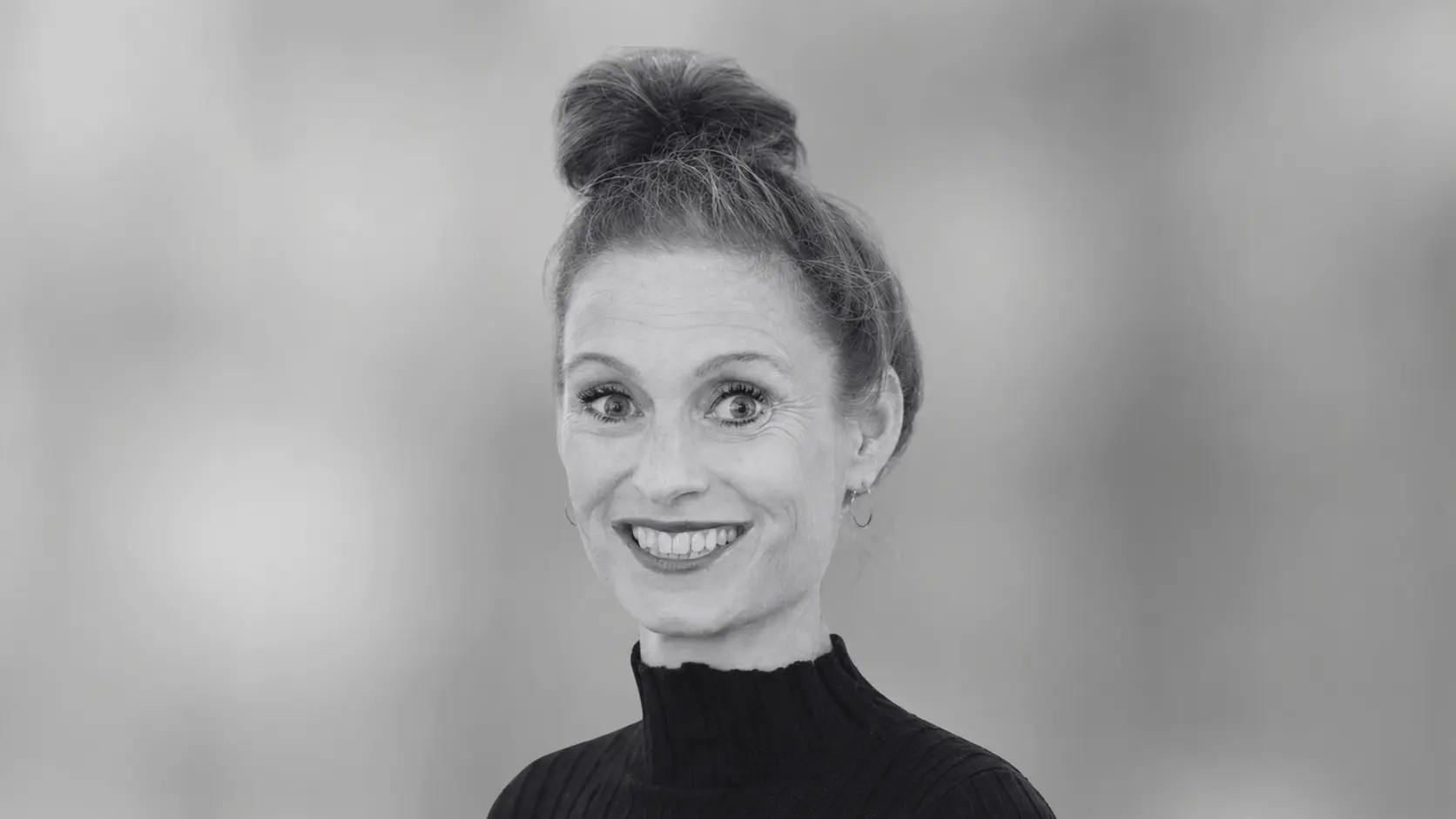
About this Guest
Maj Seider
Leadership Consultant / Partner at LEAD Forward / Co-Founder of Beyønd / Transformation & Leadership Team Transition Partner
What happens when ambition has taken you far, but no longer tells you what leadership is for? Maj Seider is a Partner at LEAD Forward and co-founder of Beyønd, with years of experience supporting leaders across corporations, NGOs, start-ups and public institutions. She brings a rare combination of strategic insight and the willingness to examine the personal forces that shape how we lead. Beneath her professional expertise lies her own human journey through ambition, self-doubt and the pressure to prove oneself. Her story opens a larger question: can leadership become less about securing our own position — and more about serving something beyond ourselves?
Connect & Learn More