Stephanie Schoss
What She Learned About Trust, Vulnerability, and De-Armoring — Coaching the Top 0.01% of CEOs
Episode Summary
Dr. Stephanie Schoss has spent almost 15 years working closely with senior executives at the University of St. Gallen - often in small, confidential settings where CEOs say the things they would never admit in public. What she has observed challenges the image of the powerful, self-assured leader. Behind the polished exterior, many struggle with loneliness, fear of failure, self-doubt and the pressure to always appear in control. And paradoxically, Stephanie has found that even highly armoured executives often deeply welcome vulnerability once it feels safe enough to show it.
The conversation explores what these moments reveal about trust, leadership and the hidden cost of always having to be the strong one. Why do leaders ask others to trust them while struggling to trust their own teams? Why does vulnerability so often create relief rather than weakness? And what happens when a CEO finally stops performing certainty and tells the "naked truth"? At its core, the episode asks: what can we learn about leadership from the things top CEOs only reveal when the armour comes off?
Resources Mentioned
People Mentioned
Stephanie (00:00) I found out that executives who lead in their full armor actually love vulnerability. But you have to guide them into the experience — it doesn't come naturally, it's not rewarded by the system or the public. These are the moments I cherish most: when one person starts with an unconventional story, the naked truth, and I can really feel the energy in the room. They say, look, this is something, I have to tell you I feel very lonely in that, and I'm very confused.
Dmitrij Achelrod (00:45) Welcome to Inner Pioneers, a podcast for those who feel the call to break new ground within themselves. Join us as we dive into real stories of transformation and learn from leading voices in psychology, science and human development on how to move through inner shifts and seasons of change. I'm your host, Dmitrij Achelrod, and now let's begin pioneering.
Dmitrij Achelrod (01:10) Stephanie Schoss is a coach, researcher and thought partner for leaders navigating complexity and transformation. She's heading the Senior Leadership Executive programs at the University of St. Gallen, where she works with C-level individuals at the intersection of inner development and organizational impact. Stephanie studied business administration at St. Gallen, Harvard and the Singapore Management University, and wrote her doctoral thesis on team effectiveness at the Technical University of Aachen. Her main research and teaching focus is on team personality, team leadership, and the effects of conflict, empathy and we-consciousness on team effectiveness. Stephanie's work is rooted in the question of how we can create organizations that are not only effective, but truly life-serving.
Dmitrij Achelrod (02:04) Stephanie, welcome to the podcast. It's a real pleasure to have you here, and thanks a lot for taking the time.
Stephanie (02:13) Thank you for inviting me this morning, Dmitrij. I'm really excited to explore life and the world around us with you.
Dmitrij Achelrod (02:23) Really looking forward to that. Even though both of us have a little handicap — we both have the flu, so we'll try our best not to sound too weird.
Stephanie (02:31) Absolutely — makes it really real.
Dmitrij Achelrod (02:33) So where to start? Stephanie, you are wearing so many different hats, and in an intensity that is really almost unrivaled. I feel very much in awe when I hear what you're doing in your life. You are a researcher at the Hochschule St. Gallen, you're leading one of the leadership development programs dealing with elite C-level leadership, you have founded several organizations — for instance C-Talks, a roundtable for senior organizational leaders in Europe — you have four children and four stepchildren, so a very busy family life, and at the same time you're also a private and commercial pilot. When I look at that and step back from all these different roles that require very different mindsets and attitudes, the question that arises is: what is currently life asking of you?
Stephanie (03:48) That's a good question, and I sometimes wake up in the morning with this question. I would say the answer is that life is asking me to not do more. In an older version of myself, there was this thrive for efficiency — do it more efficiently, do it better. But it's not about doing more and doing it more efficiently, it's about being more, and maybe even being more in the doing. So I'm looking to expand the experiences in whatever I do, and expand my presence. Especially around this time of year, the Christmas season, which is always crazy, this is a good exercise field for it. I also discovered about myself that I can really manage it all — but it's not about managing it all, it's not about managing the children. I have an awareness when I do this, and I can do it very efficiently, but that's not the experience I'm looking for, and not what they're looking for either. It's about being more in their presence. So I think life is asking for expanding in the being, not rushing more in the doing — saying more no to things for a deeper yes to other things. This is really a question I often ask myself: when I say yes to something, what do I say no to at the same time?
Dmitrij Achelrod (05:27) It's very interesting. When you say you're trying to be more in a being mode and less in a doing mode, it reminds me a bit of the Tao Te Ching, which also talks about doing by non-doing. At the same time, it does sound paradoxical to people — how can you get things done if doing seems to matter less? So what does it mean to you?
Stephanie (06:01) I would say it's the constant reminder of being more by doing less. In every single step I take — because I do a lot, because I've created a certain complexity in my life — the way I stand in an experience matters. When I'm in an experience, whether it's flying a plane, cooking a meal, changing diapers, or holding a meeting, I'm really interested in how deep that experience gets, and how much presence I can bring to the room, to myself, and to others. It sounds simple, but it's about the way I show up in these experiences. I love to explore life — I see it as a big adventure, and I see my different roles as teachers and experiences that deepen and expand life. I also like to go by what I call the wisdom of imperfection: you cannot overestimate the unimportance of almost everything. And I can tell you, Dmitrij, this is really what flying teaches me. When I'm in the cockpit and I have the overview effect of the world and my life, I get into a state of being fully aware, because situational awareness is everything in the cockpit. It's also a state of being very humble, because humans aren't made for flying, so you have to be humble enough to be up there. But it's a form of detachment from experiences and things — it's not me being that experience, being that emotion, being so important in my role, but watching myself and life from above. That brings me a great sense of detachment, and the lived wisdom that you don't have to be so into everything. Sometimes just relaxing and letting things go their way helps.
Dmitrij Achelrod (08:20) Yeah, beautiful. What I hear is that you're asking yourself: how can I be as present as possible wherever I am and whatever I do? And by being present, you deepen the intimacy to the moment — whether you're with the children or in the boardroom.
Stephanie (08:44) Yes, that's a nice way of saying it — it's really the intimacy to self, to life, and with others. One of my great teachers, a Maori elder, taught me that intimacy is a way — he describes it almost like a word: "into me I see." Intimacy is "into me I see," through the presence of life, through the experiences. I have very, very intimate relationships to the planes that I fly, to a degree that I sometimes ask myself: can you fall in love with a plane? It's the intimacy of experience that gives me the self-reflection and awareness — into me I see — in the presence of an experience.
Dmitrij Achelrod (09:40) So what is the answer? Can one fall in love with a machine?
Stephanie (09:43) I don't know, but I can.
Dmitrij Achelrod (09:44) Speaking about intimacy with life — it seems like an essential characteristic of the path you're taking, deepening that presence, that intimacy and reciprocity with everything you interact with. Would you say it's always been so, also in your younger or earlier periods of life? When you were a student, I think you founded a fintech company, a startup in the financial sector. How did you look at intimacy and presence back then — was it more of a classical understanding, you know, a motivated young lady who really wants success? How do you look at that from now?
Stephanie (10:40) More the latter, I would say. I had a very different understanding of leadership and of myself. I would say I have very interesting energies within my system — one is more nurtured by the flying, the overview effect, very spiritually grounded, a vast energy; and then I also have a very linear, what we might call in this world more male energy — very goal-oriented, getting things done. Sometimes they co-create, sometimes they fight, and sometimes one wins. In my early years I was really more of a tomboy — I was thriving a lot on this, let's call it for the moment, the male energy dimension. I was so motivated to become this hero leader, to be the smartest person in the room and create a vision everyone wants to follow. I thought this was the service I could do as a leader. Sometimes I realized later that I was even sacrificing people for the vision.
Dmitrij Achelrod (11:47) Can you give us an example of how you would solve issues back then, with that mindset that success is paramount, and sometimes you might need to steamroll over things you'd now be a lot more protective of?
Stephanie (12:06) Yeah, I would say the leadership was more "I"-centered. I had the idea of service in leadership — I do something for the company to realize our vision, to motivate the team. Success was always measurable and acknowledgeable by society, and first and foremost achievable by willpower. I saw it almost as my duty to train people in willpower, to replicate what I found to be individual success — my then definition of success — also for the team. I would motivate people to live that vision and give everything. When pressure got high and time got short, that was actually the interesting leadership moment: just give it all, sacrifice maybe yourself and your health, and go over it. If we didn't succeed, this was more a failure of the team — people didn't try hard enough, they weren't willing to sacrifice it all. This is how I felt about things back then.
Dmitrij Achelrod (13:22) And where did you get that role model of leadership from — the idea that there needs to be a quasi-heroic figure guiding the way, and that a leader's task is to persevere through the storms of life? Was it something you learned in business school, or was that just how leadership was traditionally regarded?
Stephanie (13:50) That's a good question, and I'm not sure I know the answer. But guessing from my perspective now, I'd say this ideal of heroic leadership is still quite system-immanent today. When I look at all the leaders I work with, I feel there's a big fear of showing weakness, because the system doesn't tolerate a mistake — then it's you who has to take responsibility and who has to leave the company. So this fear of failure is, I'd say, partly how we've created our systems and organizations, still today. And self-critically, coming from an educator's perspective, the way we teach leadership is often about polishing behaviors to become better leaders, but missing the inner shift — relating to our talk here — really becoming another version of yourself, another version of a leader, rather than just obeying the behavioral rules that society and the business world want to see, playing them better but not being them authentically.
Dmitrij Achelrod (15:06) You mentioned that inner shift — it seems like back in 2008, when there was the financial meltdown, there was a moment or period of restructuring in your life and your company, and this is when you had an important realization that shaped your future path. Could you expand on that a little?
Stephanie (15:33) Yeah, it really feels like another lifetime. It was one of the first companies I founded, in the financial field, as you said. I invited a finance professor from Harvard into the team, and my now-husband — together we founded the company. I thought we were doing very smart things, and I took a lot of pride that we'd hired the smartest people from Harvard, people I couldn't even follow in my thinking when they spoke. We were basically trading liquidity in the market. Then, in 2007, there was a big liquidity dry-out in the market, and we were hit hard, to an extreme situation for our company. When one of my colleagues stepped out of the team at that time, I thought, again, this is a lack of willpower and endurance, not resilient enough. I reacted with resentment and anger — I said, look, this is the tough moment where we have to stand together. But I missed the point that I might have contributed to a situation where we weren't deeply connected and trusting each other, that we could pull it through and reinvent ourselves as a team. It was vision first, product first, and then people. I think the fundamental shift came when I realized: people over product. But also realizing that we — and me as a leader — had created systems that sometimes sacrifice people for a good product or a vision. I had this realization: sometimes you hit rock bottom, and then the inner shift comes a bit quicker, but it's usually a very long process, longer than your mind thinks — the mind thinks "I've got this," but until you really bring it into the living, it takes a long time. I realized my deep interest wasn't scaling or financial products. I do love the entrepreneurial spirit, the spirit of creating something new, ideally something the world really needs — but it's also about understanding people better, understanding the individual, understanding teams, and understanding the "I" and the "we" dimension and how they play together. This became my big passion, and it was actually the moment I started flying and started my PhD, on deep-level diversity and inner team dynamics, understanding what really makes a great team. Now, people at the university laugh at me and say: look at you with your big family, it's a whole tribe — you had to study team research to survive at home.
Dmitrij Achelrod (18:34) It actually makes sense, I never thought about that. In your academic work, and I think also in your practical work with C-level executives, you talk a lot about the concept of we-consciousness — how can we move, both as individuals and as organizations, from a more "I"-centric worldview to a more "we"-centric, we-consciousness perspective?
Stephanie (19:16) The ingredients in we-consciousness — I think trust is a central element, and psychological safety as well. Whatever we want to bring out in the world, in a system, in a team, we have to internalize and do the inner work first. So there's always this dimension between "I" and "we" — it's about a strong "me" in service of the "we," and understanding that they're interlinked. It's not about leading from an inner state of complex — that imposter syndrome, "I'm not good enough," so let me manage the outer team and get that part right. It's really a very intimate dynamic from me to we. Trust is the interlink — the we-consciousness, when we describe it academically, is not an esoteric concept. You can think of it as team spirit, and breaking team spirit down into its molecular structures, understanding the affective elements and the cognitive elements and how they play together, and how you can measure it. That's what academics like to do, and that's the part of me that's very curious about measuring the things you feel but can't see so much in the world. Trust is the interlink between the cognitive and affective elements of a team. And then you can take it one level deeper and ask: so what is trust? There's basic trust, hopefully, that we have when we're born — trust in our mother. When we grow up, there's trust in the world, something that carries us like a safety net. Then some people have a strong belief and trust in an overarching order, a higher power, a God, or whatever — something that guides them from above. And in the middle, there's trust in yourself, out of which confidence arises. You can unfold each of these elements in we-consciousness and go deeper. I'd recommend starting with trust: are we trusting ourselves? Are we trusting Mother Nature? Are we trusting a higher power for guidance? Or do we think we have to do it all by ourselves, all alone? If you find the connection to these elements of trust, it's easier to be an integrated system between your head and your heart — and easier to be an integrated system between the "I" and the "we" dimension.
Dmitrij Achelrod (22:06) Very interesting, especially the different layers of trust you spoke about — the trust in something maybe beyond yourself, something larger, nature, the universe, life — but also a fundamental level of trust that we ideally get when we're babies, toddlers: the trust that we are safe. If I think about the classical archetype of a leader, it's more the picture of the strong person who carries it all on their shoulders, who has to fight their way through life, often against life and against the stream. Do you see your concept of trust as often in stark contrast to how people initially think they should behave?
Stephanie (23:11) The short answer is yes, but let me explore the deeper answer. Sometimes we miss — trust is very popular these days in leadership training — and what we often get wrong is that we try to make other people trust us and trust the organization, while we as leaders aren't really trusting them. We're still kind of controlling them, micromanaging them, observing whether they're really good at trusting us in the system. So that's why I say: whatever you want to bring out in the family, in your team, in your organization, in the world — think of it as concentric circles. You have to start inside. It's the old saying — I really think this is the holistic way of leading and being: it starts, it comes from within. In order to create trust in a system and in a team, you have to be trusting the system, the team, the others, but also be trustworthy — it's these two ways. In order to trust the system and the people, you have to find your source of trust — is it trust in life, in whatever you call it, the universe, God, or a higher power? You have to find your trust in order to create a culture of trust. It's not something we can demand as an imperative from people if we don't feel it inside ourselves, if we're not trusting. It's again polishing behaviors in a system, but it's not the truth, it's not the inner shift you're looking for, Dmitrij.
Dmitrij Achelrod (24:56) I'd like to go a bit deeper into this concept. One question is: how do these elite executives react when you say, well, actually you first have to work on yourself — and this means also a large degree of vulnerability, which is necessary, because otherwise you can't access these tender places and connect to these sources of trust, of energy, of kindness, and so on. How do they react? Because my experience from working in large organizations is that the mindset is still very rationalistic — it's about data, statistics, the next quarter, often short-term gains. So how does this deep vulnerability play in?
Stephanie (25:56) I found out that executives who lead in their full armor actually love vulnerability. But you have to guide them into the experience — it doesn't come naturally, it's not rewarded by the system or the public. These are the moments I cherish most: when one person starts with an unconventional story, the naked truth, and I can really feel the energy in the room. They say: look, this is something, I have to tell you I feel very lonely in that, I'm very confused, or this is how I feel treated, or I actually have an imposter syndrome, I don't get it right. And then, when one person starts, and you help people get to that point — the whole room, and our rooms are very small, we like to have ten people or fewer — the whole room connects, and there's this big energy of relief: "oh my god, I have the same, let me give you my story." There's this big release, you can feel it physically in the room. And when people finally start to laugh from deep down, from their bellies — "oh my god, I can let it out, I'm not alone, this is so good" — often they say, "I thought I would never talk to anyone about this in my entire life." It's almost healing, it's detox, it's cleansing for what they hold in their system. This is why I say I've come to realize they love these moments, where they can be really true — not only to the world, but also to themselves — because otherwise they have to be very masked, portray this polished behavior, the responsibility, make great organizations and cultures, while still feeling very vulnerable and fearful of making mistakes and being sent home again.
Dmitrij Achelrod (28:07) So what are your secret ingredients to creating a container where people feel safe enough to open up and talk about things they thought they'd never mention to anyone else — especially given that these people are under constant scrutiny? Everyone's looking at their fingertips, and god forbid a mistake happens, then heads will roll, or their heads will roll — that's often the fear. So how do you create the setting where people allow themselves to open up?
Stephanie (28:44) I'd say the setting makes a big difference. I try to create settings where people naturally show up more as humans than as role holders. I once said to the CEO of a very large bank, who was inviting me at the time: let's not meet in your boardroom, let's choose a shisha bar instead. He said, why? And I said, because we want to invite people to show up as people, not as function holders who are being observed. We ended up holding the meeting in a football arena — not during a game, just us. Having an unconventional setting — the football arena was great because they were mostly men in the room, and I think this is where they can have real emotions. Creating a room where people can be present as just the human, not the function holder, is one element. The other element: it's great if there's a role model in the room who baselines that experience, and then other people follow. It's most powerful if it's one of the members of the group. Often we come to this level of depth in one-on-one discussions, and then I'd ask someone, are you willing to share part of this experience with the group? It takes split seconds, because our bodies are so intelligent, we pick up so much more than the words when someone gets really real. So it's the people, the setting, keeping it small — and of course, I've been doing this for almost 15 years, and nothing has ever gone out of the room. We've had very relevant and delicate personal and business situations. You have to build this organizational trust: I'm safe to speak here.
Dmitrij Achelrod (31:08) Of course — and I can imagine confidentiality plays a huge role when people open up, especially when the potential downsides are really large for them. Can you give me an example, fully anonymized and sanitized so that person's confidentiality isn't compromised, of a shift you noticed happen to someone by finding their inner resources or their trust, and how that changed their relationship with their team or even their organization at large?
Stephanie (31:48) Before I answer that, something else came up — the question of what my role is in there. From the outside, you'd say it's a woman inviting men, there's some dynamic in there. I was observing myself, and I can say: when I'm connected to my strong male side, which comes out more as people say "oh look, you're a superwoman, all you do in life, you fly planes" — men usually like that, they have an affinity for it — the dynamic in the room doesn't really change, because I'm just another male energy in a female body in the room. But when I move more into this — I don't know if it's feminine or an archetypal side — the connectedness, the co-creation, the energy, the soft factors, that's something I can bring into the room that helps create a better connection, not between me and them, but between all of us. So again it's the question of presence, and how you show up in the room. It's not so much about male and female, because we both have these male and female qualities we label that way — they're more archetypal energies in us. The question is: what do you bring into the room, what do you provide, to make connection, depth, presence possible among everybody? So again, I was reflecting on the me and the we. What's my part in the equation? Now, coming to the story: I have almost weekly amazing, fascinating stories. But I'd say it was a CEO who, in a personal conversation, let down the armor and the masks and told a story of his life, which until that moment he'd kept more closed up, shy, vulnerable. Usually these stories relate either to a feeling of not being good enough, or, as I said, imposter syndrome. It was a very personal and intimate story. I had a beautiful conversation with him about his story, this narrative, his life, and what he learned from it. I asked if he'd be willing to share, and we both had this feeling of, wow, this could be a revolution for CEOs — you don't have to be that perfect, polished person, you can be very real, with a full life, lots of ups and downs, mountains and valleys. I could notice this inner shift in him, and then sharing the story in the room with other C-levels, seeing how they reacted and how they were unfolding stories in their own lives, becoming more real by it. A conversation spun out of that: okay, how do we bring this being-real back into our organization, our culture, our families at the same time? I felt this was a shift to a more integrated life, a more holistic way of leading yourself, your family and your organization. That's what I loved about the story — the inner shift in that person, and then the question of, wow, how will I show up differently in my family and my executive team, and how can we inspire a culture for the whole organization? Again, the concentric circles, expanding from the moment of that inner shift.
Dmitrij Achelrod (35:54) How do organizational structures that are very rigid, often dictated by outside forces — the stock market, economic situations — how do these company structures absorb, or actually defend themselves against absorbing, such new impulses? Let's say a CEO comes back with an epiphany, a realization of how important it is to lead through inner trust, with an open heart, a vertical alignment of heart and hand and brain. How easy or difficult is it to really change organizations, or will they just be crushed — they come back open, sharing their vulnerability, but the system just crushes it. What's your experience?
Stephanie (36:56) I'm hoping, and my experience is, that it's easier to make things new than to change old systems. I have a strong link to entrepreneurs and entrepreneurial life, and many of my members are in corporate life, and I think with every revolution and invention it's much easier to do it anew than to change it within old structures. As long as we have to change underlying assumptions — what is success, that it's not just a measurable, utilitarian function, that loudness isn't mistaken for competence in a system — the ultimate stress test is always when pressure is high and time is short, and you fall back into autopilot, into what's expected of you, what the market rewards, what your shareholders want. That's very, very hard to change. We also have to be realistic that we've created systems that make people the way they are — when I see bad leadership behavior, I see it as a symptom of the systems we've created, not that these people created the system. Of course, it becomes a perpetual motion machine, and it's difficult to break within the old structure — much easier to do it anew. That's why I love executive education, education in general, because it helps a new generation do things differently. And yet, I think there's great power for people in a position of power to create the landing strips, the runways for the future. Then again, I think you have to start from the inside out — don't start, and I think this is a big mistake, trying to change the system from the outside if you don't live it yourself, if you don't feel it yourself. I think a lot of the war in the world today comes from people trying to fix something in the outside world when what they're really looking for is peace — trying to find peace through war. If they started with inner peace, and saw how they could expand that from their concentric circles, within their family structures, within their business, and then within their countries, it would be more powerful. We shouldn't forget the circles of influence we all have — it's always worthwhile trying, but it's harder to do in established systems.
Dmitrij Achelrod (39:38) Definitely. I think it's also part of Evolute Institute's main convictions that change needs to happen from the inside out. Of course we need to work on systemic levers and structures, but they won't change if there isn't an internal conviction or drive that needs to be slowly massaged into a new form. It's a slow process, and there's a lot of system inertia, a lot of incentives to keep structures as they are. And as we've talked about bad leadership — when I sense into what a lot of the discussions on the internet are about, it's really a lot of "we against them," and especially a lot of people feel completely disconnected, both from top-level leaders and from the organizations they're heading. I have the impression that a lot of people really have anger and rage against the system, because they see themselves as losers of the system. This leads to extremism — for instance, Luigi Mangione in the US shooting the CEO of a health insurance company, and many people cheering for that. You see how much spite, rage and anger there is that leads into violence. So my question is: to what extent do you actually see real bad leadership — especially since there are studies showing that some people in very high leadership positions display certain characteristics of the dark triad: Machiavellianism, narcissism, and sociopathy. To what extent do you think that's true?
Stephanie (41:55) I think it's rewarded in many systems and structures today — this Machiavellian and narcissistic behavior, complete over-self-confidence, excessive risk-taking, instrumentalizing people — that this is part of the set of what we think of as how you lead organizations in a great way. I think there's still part of this systemic memory — it's a systemic problem, and the system has a memory too. Even I have that resonance in me, when I see, wow, look, they've been so successful — I think of a couple of great entrepreneurs we all know who have been terrible human beings, but because we see this innovation, this thing we label success, it heals all misbehavior. That's why I think it's partly still the case — we have an affinity for this rigorous, Machiavellian system, which doesn't need to be that way. It's a reinforcing mechanism through the system. That's why I said before, we have to challenge the underlying assumption of what success is — not only for a company, an industry, or a country, but for humanity and for the planet going forward. My pilot nature says we have to level it up, look at things from 50,000 feet, and not be so associated with a company, a role, my position of power, but level ourselves up and become more of a "we" spirit. Then I think we can create a more humane world, and a more humane business world.
Dmitrij Achelrod (43:55) I agree, and what you said about taking a higher perspective reminds me of the phenomenon when astronauts go into space and suddenly see the Earth as this small, fragile, pale blue dot, worthy of so much protection — it shifts your perspective from "me against you" to "we are all in this together, there is no other way." And I'm totally with you on that. At the same time, how can such a mindset survive in a world that is very predatory, where the power of the strongest dominates, and it's not necessarily truth and beauty that prevail — right now, especially in geopolitics, it's just power play, muscle, violence.
Stephanie (44:55) I want to elaborate on this astronaut experience in a bit, but I think if we bring more people into this altered state of awareness that astronauts have, where power becomes more relative and the connectedness, the oneness of humanity as a species becomes more obvious, it would do us a great favor. Then the question is: when you've had this experience, this inner shift, this altered state of awareness, how do you make sure it doesn't collapse in the presence of the old systems, the old rigid world we bring it back to? But we can talk about that later — I want to go back to the astronaut experience, because as an aviation fan, this was always a big question for me. It's called the overview effect — there's academic research, and I've looked into it a little. The overview effect is when an astronaut watches the essence of their existence with the Earthrise, this small blue dot, and says: we don't see different races, we don't see borders. This is what I described from my cockpit experience — you detach, you have the absolute overview, and things become more relative, and actually more peaceful. I've experimented myself with weightlessness flights — parabolic flights, where you get moments of weightlessness — and you get similar experiences, a feeling for the holistic essence of life. One of my little secret projects is that, together with astronauts and researchers, we've created a small center called the Center for Faith in Space, where we interview astronauts about that experience and what humankind can learn from this grand overview effect. It has this element of overview, of detachment, but also of awe — awe of something so vast that with your whole body you want to integrate the experience, you want to capture it, and you have to upgrade your mental model. There are different categories of awe — you can experience awe seeing a great virtue, a great pianist, a great leader speaking, a Nelson Mandela speech moment — but you can also feel it in vast buildings, which is why the big castles, the big cathedrals, the big corporate boardrooms give you this moment of "wow." The funny thing is: when you see people standing in a huge cathedral going "wow," what do they do to capture the moment? They just take a photo — "I have to upgrade my mental model, let me just make a picture and conserve it." So the real question is: when you have a moment of inner shift, how do you bring this into new creation, into a life-sustaining, life-birthing element, to shift the fundamental assumptions of the old system, and so shift the old system itself?
Dmitrij Achelrod (48:36) So what are your experiences — what helps bring this momentum into life? Because sometimes we all have the feeling, such a beautiful view, let me take a picture — and then a year later you look at the picture and it feels so disappointing, it doesn't capture the intensity of your awe, and you just discard it. So how do we keep this little ember alive?
Stephanie (49:04) Yes — my personal rule, and it's not only for the awe, for the overview effect, but for all moments of inner shift, moments of transformation, insight, awakening — and I'm sure on your retreats, Dmitrij, this is what people experience, an altered state of awareness, of insight, of intimacy with life and yourself — my personal rule is three things. The first is translation: how do I translate this transcendent experience into an everyday life? It's really important that we bring it into the rational, three-dimensional world, and how we translate it into it — this big moment of aha, of insight, or a small moment of awakening or awe I had — what does it mean for my way of living, for the next meeting I hold? So translation is the first element. Practice is the second: how do I create new routines and rituals out of this vast, enlightened experience? How do I create livable, small rituals and routines out of it, so I can integrate it into life, especially when the spark of the experience starts to fade away? Because in the moment it fades — you look at the picture and suddenly it's just a 2D picture that doesn't speak to you anymore — I've often had a moment of, what a betrayal, maybe this wasn't really true, like this grand experience collapses. So practice is: find a translation, and practice this translation in your daily routine. My third element is social support — community. Having peers with you on the way, mentors or coaches who help you keep the experience alive and livable, and bring it into the power of creating something new.
Dmitrij Achelrod (51:12) How beautiful.
Stephanie (51:13) Translation, practice, and community, I would say.
Dmitrij Achelrod (51:17) Yeah, and I think we oftentimes underestimate the importance of community. We think we have to do it alone, but historically we never have — we've always evolved and lived in community and tribes. I think it's a vital component of keeping this alive, having other people who can support you on the journey. I think that also plays beautifully with your concept of we-consciousness — from I-centric to we, so I don't have to do it all alone, I need the nourishing support of other people.
Stephanie (51:57) Yeah, and we say we-consciousness is a cognitive and affective alignment of a team or a group. If you're in this alignment, it gives you goosebumps — it's a full-bodied experience, for your mind, but also for your body and your soul. It's something you can feel.
Dmitrij Achelrod (52:24) You've talked about altered states of consciousness — for instance induced by flying, or even zero gravity for a few moments, which is super cool, I wish I could experience that one day. But you've also recently initiated a research project in collaboration with us and others conducting work on altered states of consciousness, particularly psychedelic work — you've explored, together with your students, how altered states of consciousness translate into mindful states or traits. What's your view on how altered states of consciousness play into leadership development?
Stephanie (53:13) As a researcher, I'm always curious, and my question is always: is there more, is there more to explore? At one point I felt we're coming to the limits of our leadership concepts and frameworks — as I said, it felt like it's more about training people in more polished behaviors, but not helping them make an inner shift of awareness, becoming more in their being, not just in their doing, their showing and pretending. I was interested in this question, and I've done research — and of course a lot of practice — on different kinds of mindfulness practices, and we know how beneficial they are for our resilience, our happiness, the way we live and lead. Then my awareness was drawn to psychedelics, when there was a movement of liberalization around using psychedelics to heal people with mental health issues, or sickness — how well that worked for anxieties, depressions. There were studies here in Switzerland, but also in Germany, done in controlled hospital or practice settings, where they treated cancer patients — not against the cancer, but against the fear — preparing them for death, helping them be joyful and live life as intensely as they maybe never did, in the presence of death. I could relate to that feeling of "I'm so threatened, I don't know how to exist, how to live, how to lead" — this is an element I often see in the executives I work with, when the pressure gets so high, the fear gets so big, they don't know how to breathe, to sleep, to exist in connection with who they really are in their essence. That's why I thought: if that helps people in extreme situations, but also with anxieties or depressions, it might be helpful for leaders with similar symptoms, to become more resilient, more holistic leaders. That's why I was interested to learn more. What we actually found in our study was that people become more resilient, and become better bridge-builders for themselves, in the world, and for their companies. Again, here we land at the same point: the make-it-or-break-it question is how you integrate these experiences into becoming the better version of yourself — living life more deeply, more holistically, becoming the better bridge-builder.
Dmitrij Achelrod (56:17) To what extent is the word "psychedelics" known among top-level leaders — is it something completely fringe, or has it also moved more into the mainstream?
Stephanie (56:32) What I observe is a big longing in people for a better way, a deeper way of living life, a more holistic way. Maybe because we've become more secular as a society, and in former days the church served the role of "you're not alone, there is more, you're guided." Today, I feel people are looking for this knowing, this feeling, again. That's why I observe people leaning more towards any form of experiencing altered states of consciousness — not necessarily with psychedelics, or only with psychedelics, but through breathwork, meditation, silence retreats, pilgrimage — different ways of getting away from the noise in the world and the noise in your head, connecting more deeply to yourself in the world. This is definitely a trend I see: people looking for new ways of connecting to themselves in the world.
Dmitrij Achelrod (57:46) I really hope this will also be a lubricant for change — when people are more connected with themselves, when they have more clarity about what's truly important to them, their values, and what they want to bring into the world, that's part of the story of inner shift, inner change. Hopefully this is just another puzzle piece in changing systems towards more life-affirming structures.
Stephanie (58:16) Exactly. I had to smile when that thought came up in me — there have always been a lot of drugs in the business world, but maybe 20 years ago the drugs were more about how to play the system better, how to stay awake at night, how to pull it through with energy. So there's maybe even a positive development — people now lean more towards substances where they can see and feel a greater truth, a greater future for humanity and the planet as a whole. That made me smile, to see the experience people are seeking and how they get there — there's hope. Do we always need substances for that? I don't think so. But for some, it might have been helpful to open those doors to states of consciousness, so they know them and can go visit them more and more in their everyday life.
Dmitrij Achelrod (59:28) As you said, I also think what seems to trickle more and more into the corporate and leadership world is more of these archetypal feminine energies — of feeling connection, of seeing the whole, not just one little excerpt or dot. It's about trust. I feel these qualities are, at least archetypally, more feminine — and this hard masculine thing of streamlined, linear achievement, power, force, needs to be complemented by a wisdom that comes from taking a higher, larger perspective.
Stephanie (1:00:17) Yes, in a way. But I think the ask is more that we don't just throw empathy into the same game and play it a bit differently — we need to change the playing field, the underlying assumptions of how we want to play, how we want to live as a human species. Sometimes we talk about male and female, and adding more women to the system brings change — but I did research with a student of mine on police departments and the heads of police departments. After eight periods of male leadership, they finally had a woman as head of the police department. We did a psychometric analysis of her, and she was, in her personality qualities usually described as male qualities, more male than any of her predecessors. So it's not so much about more women or more men — it's more about the archetypal energy, as you describe it. In my own life, I have that male side that likes goal orientation, that likes flying, moving heavy metal, and I have my other side, more towards connection, creation, and intimacy. It's a balance we have to seek in our individual lives and bodies — and in systems as well. But for that, the underlying assumptions have to be challenged: what is the playing field, what do we want to create, what do we want to do with this life and this planet?
Dmitrij Achelrod (1:02:07) That's beautifully said, and I don't think I have anything to add here, Stephanie — as we're slowly coming to the end of our conversation. Maybe there are a few entrepreneurs, a few executives listening to this, and maybe some of them feel lonely, struggling with all the expectations, especially the expectations they have of themselves, but also from the outside. Is there anything you would tell them?
Stephanie (1:02:34) Yeah, I would tell them: go visit Dmitrij, go on a retreat for Inner Shift — without you asking me to say that. I would say that life is beautiful, and there are different ways. It's a great path if you decide to live pro-life and explore it, to find better, deeper ways to play this game of life, to experience life and love in the deepest way you can. Starting with meditation, or starting with breathwork, I think is a great start — I know you also do darkness retreats these days, which is another form of moving into these states. Throw yourself into the experience, and then take care that it doesn't collapse when you bring it back into your life, by keeping a community alive and practicing and translating it into life. That's what I would recommend.
Dmitrij Achelrod (1:03:38) Thank you. So maybe to wrap up — if people want to find out more about your new work, where should they look?
Stephanie (1:03:46) Well, on the experience of weightlessness we published an article — I don't know if you've seen it, but that's for sure something we can share with people. And where do they find me? They find me at the University of St. Gallen, or around Switzerland, Germany, or New Zealand — that's where we are. I love personal encounters.
Dmitrij Achelrod (1:04:14) Wonderful. Stephanie, it was a pleasure having you with us — thank you so much for taking the time, I really appreciate that. See you very soon.
Stephanie (1:04:24) So did I. It was a great hour of exploring how to live life to the fullest.
Dmitrij Achelrod (1:04:32) Thank you.
Stephanie (1:04:33) Bye bye.
About this Guest
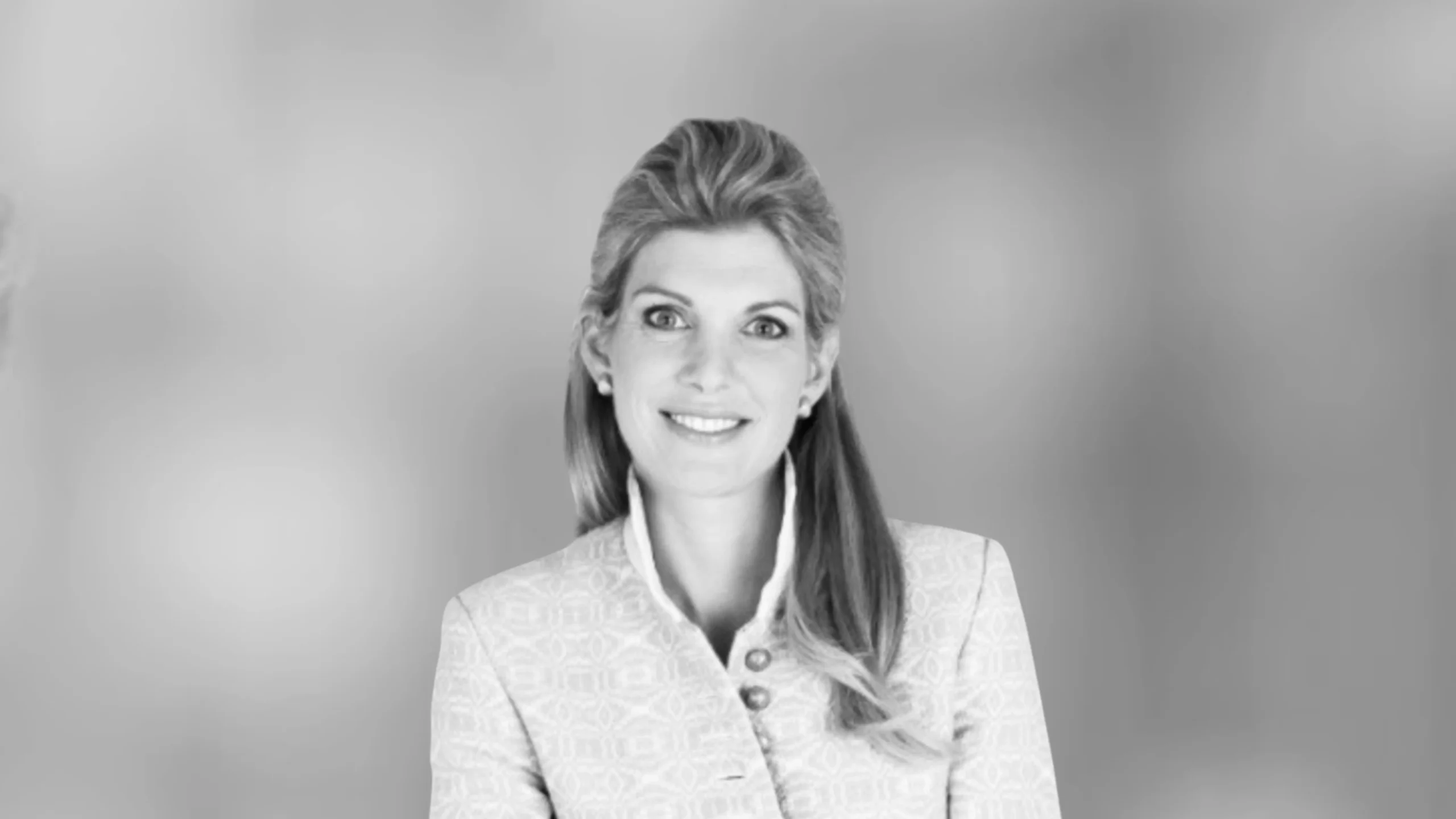
Stephanie Schoss
Leadership Researcher & Director, Competence Center for Top Teams at University of St. Gallen / Leadership Facilitator / Entrepreneur / Pilot
What if some of the very qualities that take leaders to the top - self-reliance, control and the ability to appear unshaken - eventually become the qualities that leave them most alone? Dr. Stephanie Schoss is a researcher, executive educator for the 0.01% of CEOs, entrepreneur and pilot whose work with leaders explores what becomes possible when conventional leadership tools reach their limits. Through her work and her own inner journey, she invites leaders to consider a more human form of strength: one grounded in presence, vulnerability, and self-trust.
Talks & Recent Podcast Appearances