
Constanze Buchheim
Why Most Leaders Are Still Ruled by Their Childhood
Episode Summary
Constanze Buchheim, founder and CEO of i-potentials, explores how leadership is deeply shaped by childhood conditioning, emotional imprinting, and unconscious relational dynamics. Through stories of entrepreneurship, responsibility, crisis, and self-reflection, she reveals why many leaders unknowingly operate from old survival strategies while believing they act in service of the organization. The conversation dives into mature leadership, systemic awareness, emotional intelligence, and the difficult process of separating personal wounds from professional responsibility. At its core, the episode asks: what happens when leaders finally become conscious of what has been unconsciously driving them for decades?
Resources Mentioned
People Mentioned
Christopher Kabakis (00:00) Hello everybody. Welcome. Today we have a very special guest with us, Constanze Buchheim. Constanze, you're the founder and managing partner of a rather renowned German executive search boutique company called i-potentials. And you're also advising the government on critical issues. Maybe for those who don't know, tell us briefly — what is executive search?
Constanze Buchheim (00:24) Executive search is finding and placing the right leaders in the C-level or in the advisory board. So basically we find the next gen leaders.
Christopher Kabakis (00:37) It's like ChatGPT or Google for executives.
Constanze Buchheim (00:41) Yeah, well, a bit more sophisticated.
Christopher Kabakis (00:45) I can imagine. Okay. So of course it's all about inner shifts, about the turning points in people's lives. And with you, of course, we have a very interesting personality here today — a founder, entrepreneur, consultant, manager. So if you look back at this long and storied history of founding and managing and advising, what were the crucial turning points or crossroads that you navigated? And how did you move through them and emerge from it?
Constanze Buchheim (01:25) That's a big question. We could fill the whole session with it. What is most important is stepping out of the system somehow. I grew up, as most of us, with parents saying you have to get a solid, safe job and education. The education system prepares us for working in a company. I was intending to work in the capital industry and started there, and I heard my inner voice right away saying that is not the right place to be. So I applied to become the assistant of a founder of a company because they were really honest in their communication — I loved that honesty and just followed my gut. I became the assistant of one of the most well-known founders back then in 2006, Lukasz Gadowski. Working with him broadened my perspective. There was one moment when I was really afraid and said, what if the market breaks down and we cannot go on here? And he looked at me and said, well, then we move to the next market. I was like — wow, it's that easy. That started changing the way I looked at things. When I realized that I have a deep passion for leadership, people, and cultural topics, I knew I had to create my own business and change the world by finding and creating the right leadership. That is basically how I decided to found i-potentials. Throughout my entrepreneurial story, I had a huge ambivalence with responsibility. Part of me said I am responsible, I want to have my own company. And at the same time there were voices saying, actually I don't want to be responsible. Because of that, I did a really special coaching in the mountains on the Mont Blanc. I went there asking myself: do I want to be responsible or not? I had a really special moment where I was leading the group and felt all the weight of being responsible for the people on the mountain in the snow. There was fog everywhere, I couldn't see a thing. And then — just like in a movie — the sun came out and suddenly I could see all the way. There was fresh snow and I had this feeling: responsibility means I can lead the way, I can pave the way. My pace, my thoughts, my intention — it's not a weight on my back. And this is when I really stepped into being responsible and taking responsibility.
Christopher Kabakis (05:49) So leaving your imprints in a way with your own shoes. Was this when you had already founded i-potentials?
Constanze Buchheim (05:54) No, actually it was really late. I founded i-potentials in 2009 and I had that experience in 2021. So for years, while being an entrepreneur, I had this ambivalent feeling. And this had effects on my leadership style — I was recruiting people who were better than me and could take more responsibility from me because I said, actually, I don't want to lead this. I hired the best people. But of course they had the hardest time because I had been running the company for ten years. I had the market feeling, the understanding, the knowledge. It was unrealistic to think that someone could step in and rule out the managing partner. That is when I understood the systemic approach of organizations: if you are the CEO and you decide to stay in that position, you are having the responsibility. And this is what I realized.
Christopher Kabakis (07:26) I remember in a previous conversation you said that this personal realization process around responsibility also informs how you advise and coach leaders today — because you have a special eye for whether they are truly able to respond to responsibility. And you also point out when you feel they are not living up to that. Is that right?
Constanze Buchheim (08:06) Yeah, that's exactly the link. Because back then I realized I was having this hard time with responsibility because someone in my family did not take the responsibility he had while raising us. This led to the situation where we as kids had too much responsibility for things we were not responsible for. That was the reason I had this ambivalent relationship to responsibility. Of course I could do it. Of course I could take it. But the six-year-old girl still said, but I don't want to be responsible. While I had been on the mountain, I realized this is my six-year-old kid's voice and I can decide now: follow that voice, which would be okay — or say, no, I'm grown up, I want to have responsibility. And I realized that if I'm the CEO and I want to stay in that role, I have to decide for the more mature position. If I feel I'm following the kid's voice, that's completely okay too — but then I should not be the CEO, because the organization needs the person in responsibility to truly fill that position. And when I realized this, I understood it is true for any other leader. Any leader telling me, I know the organization needs this, but I am not this kind of person — that's completely fine, but the organization needs it. If you decide to learn and to grow, then you can stay. But if you decide not to fill that role, you have to leave that position. This is so strong and so powerful for me. It gave me no fear of talking to anyone — when I'm consulting the government, when I'm talking to ministers. They have a role, they have a responsibility. If they're willing to find a response to the challenges we see, great. If they are not, just leave the place.
Christopher Kabakis (11:41) No, it's great that you get away with it. I think people don't like to be criticized, but they also don't like people who just try to please them. To challenge people in the right way so they can take it is not so easy. And it seems that because of your own personal history and your sensitivity around responsibility, you manage to separate the role from the person — you talk to the person about their role. That helps with the acceptance of the challenge you give.
Constanze Buchheim (12:45) Exactly. Separate the role and the person. The best situation is when the personality matches the role. But that's exactly what we have to reflect on as leaders: do I want to fill that role? Do I want to make my personality match its requirements? And here you can add gentleness — because what I'm saying is: you as a person are okay as you are, there is no judgment. I accept you as a person no matter how you are. But in a role there are requirements. And what I can assess is the match between the requirements and what the role needs. That is exactly where we are judging.
Christopher Kabakis (13:45) What I also liked is how personal experiences from childhood can create a certain sensitivity around particular topics — like responsibility here — that becomes the very thing you work with professionally. You struggled with that ambivalence for many years, even while already being managing partner, then you resolved it through your own process. That gives real depth to your knowledge of the field. It all flows from early experiences through professional experiences, through your own process, and then into the gift you can offer the world. I find that beautiful.
Constanze Buchheim (14:50) Yeah, exactly. But what is needed — and this is what I call mature leadership — is that leaders reflect on what is happening. If I would not have been aware of this ambivalence and had not reflected on it, it would still have had power over me and over what I was doing. That unawareness of something pushing me somewhere diminishes the quality of my leadership, because I am not taking conscious decisions. The other thing is that responsibility is a concept you can keep thinking about more and more. First it was responsibility yes or no, and I said yes. But then the next step was: okay, I am responsible for everything. And then I had to reflect — what is responsibility? What am I responsible for? What does it mean for the me, the we, the us? And deciding that. During the last two or three years, I realized that I had actually been taking too much responsibility, which was the very reason I had the ambivalence in the first place. It was necessary for me to understand what is the me, what is the we, what is the us, and who is responsible for what. And I think there is still another layer beyond that.
Christopher Kabakis (17:07) That's interesting. At first level it's yes or no — a bipolar way of thinking. Then it gets more differentiated: what's my role, what's the role of others, how do I calibrate responsibility properly? And it becomes almost a practice, not a decision made once. Would you agree?
Constanze Buchheim (17:38) Definitely. Responsibility for me is really in the wording. It's not ownership — it's responsibility. Because ownership is another important thing. But the question is: who is responsible for finding the answer?
Constanze Buchheim (18:12) And there was another turning point in my growth story. I did a coaching where I learned about the concept of the rooms. Basically there is a room around myself, and a room around the other person. That room belongs to each of us alone. And if we're talking about relationships, the middle space between those two rooms is what we share. What we are able to create and change is the room in between — the relationship. But it is not my responsibility to step into your room and change something there. You take the decision. And it's not my responsibility to think your thoughts either. For example: if I don't give you hard feedback because I'm afraid you'll run away — I'm actually already stepping into your room, because I'm deciding what you will do before I've even acted. But you will decide what you do when I act. And I don't know that in advance. So if I give feedback and put it in the middle of our shared space, then you are able to decide whether you take it or not. It is just my responsibility to put it there. Not to take responsibility for all the actions that follow. That's yours. This is what I had to learn the hard way. When I realized this concept, I saw that I had been in the we-space all the time — always optimizing for connection, taking too much responsibility — and this not only prevented me from stepping into my me-perspective and setting real boundaries, it also prevented me from stepping into the real us. Because creating the us includes my perspective and your perspective and all the others. The ability to switch between those perspectives is what I call multi-perspectivity — and it is, from my perspective, the most important thing a leader at the top has to be able to do today.
Christopher Kabakis (21:11) All of this speaks a lot to me. These ideas around multi-perspectivity apply to personal relationships as well as professional ones — teams, organizations. There is the I-space, the You-space, and the We-space. Not just what do I need or what do you need, but also what does the relationship need, which leads down a completely different path. And some people take too much responsibility while others think only of themselves. It needs to be consciously practiced.
Constanze Buchheim (22:36) Exactly. And there are so many blind spots in Germany. If we're talking to CEOs of huge companies, you might expect them to be fully self-reflective and understand all the dynamics. But most of them think they act in the interest of the organization. Yet if you listen to them, you hear they are actually speaking from their own perspective and are not integrating the us-perspective. Being able to help them see the difference — how a decision looks from the me-perspective versus from the we-perspective — is such an eye-opener for most of them. It's not a bad intention. It's a question of reflection.
Christopher Kabakis (23:59) Yes — to create a conscious space where you can reflect on these matters. With a sparring partner it is invaluable. Otherwise we tend to conflate our own interests with those of the organization. And mature leadership means being willing to look at these things together with others, to unveil what is otherwise hidden or conflated — to bring it into a space of discussability.
Constanze Buchheim (25:02) And that is exactly the reason why empathy and listening to your emotions becomes so important. Because if we want to take educated decisions, we have to integrate other people's perspectives. And not only within the organization — because we work in a global and complex world, and it is our task and responsibility to consider the whole, not only our organization. To be able to do that, we have to acknowledge that diversity in every dimension is necessary for good decisions. And we have to acknowledge intuition — the things you just know are important and you don't know why. Integrating your intuition means integrating all the knowledge that is in your body and system, using it as an intelligence system in a fast-paced, complex world. But to do that, you have to acknowledge that intuition is based on your experiences and therefore has an information dimension. And this is something really, really new for most leaders, especially in Germany. It means listening to myself, listening to my intuition, trusting my intuition — and integrating those of others as well. It becomes truly necessary to be a really good leader. It's not just a soft fact.
Christopher Kabakis (27:14) Yes, exactly. And it also needs a cultural change, because often people are asked: how do you justify this? And they need to give facts — rational, analytical intelligence. But as you point out, there are other levels of intelligence, like the heart or the gut. Intuition is hard to verbalize. If someone says, I have a bad feeling about this — that can be valid information. It's a cultural challenge to make that acceptable.
Constanze Buchheim (28:11) And when I realized this, a funny story came to mind — the Turkey phenomenon. The turkey who was bought for Thanksgiving in the United States is bought alive, put into a cage and fed for some weeks. On the first day, when the owner opens the cage, the bird is full of fear — there's this intuition. And then nothing bad happens. This repeats for weeks. At some point, the turkey realizes: if the cage opens, nothing bad happens. The problem is, someday is Thanksgiving. So the situation changes, and the gut feeling that was true at the start is still true — but by following only the data of the last weeks, you could not predict what happens next. Processing decisions only by historical data is not valid anymore, because the actual world changes fast. There's another Thanksgiving Day every day, so to say. We have to integrate intuition again to take better decisions. We cannot just follow the data. We have to combine both.
Christopher Kabakis (30:19) Yes. Most things happening in the inter-relational space — in groups and teams — are present to us on an intuitive basis. I sometimes use the word atmospheric intelligence: you have a feeling of something happening in the space, and there is no data for that. Intuition is another data stream that informs our reasoning. And in Germany it is sometimes organized out. We need to encourage people to let it in again — it is a capacity we have. I want to hear more from your personal story. Our development is not always smooth — there may be moments of crisis, failure, or real breakdown. Were there moments like that? Can you give an example and what you learned from it?
Constanze Buchheim (32:28) Yeah, of course. I think life is about challenges and dealing with them and enjoying the moments when we are not challenged. Both are life — that is what I learned. My hardest crisis was in 2012. We had two years of success in the company and it all looked good. The market evolved and I thought it would always be that way — easygoing, just going up. So I invested, changed to a bigger office, grew the team. And I became pregnant with my second son. During that pregnancy, the whole market changed. Our revenues decreased and we could not pay the team or the office anymore, and I was six months pregnant. I already had a time pressure — three months until giving birth. At some point we had no money at all. We were basically bankrupt — we were cash-flow financed, and if you're not generating revenue, at some point you run out of money. That is what happened. It was really, really tough. I could not sleep anymore, I was in panic. Friends and consultants said: you have to take a decision now — do you want to fight, or do you give up and have a nice life without being an entrepreneur? And in that situation I felt: why is this happening to me? I felt a lot of pity for myself. And then at some point I woke up and said — it would be really easy to give up. And then I imagined giving up, not being an entrepreneur anymore. And I said, I don't want this. I want my i-potentials baby to survive. I really want this. So I decided to develop a different perspective. First of all, I had to accept it. I had to accept that we were basically bankrupt. I had to accept that the market changed. Because until then I had been hoping. And when I accepted the situation, something really interesting happened — I started gaining a different perspective. I thought: this is showing me that I'm still lacking a competence. Which competence do I lack? Why could this happen? And while asking that question, I found all the answers I needed to change. I still had three months to go. So I was really pushing — obviously my planning was not good, my financial part was not good enough. I hired advisors, created security around the time of birth. And then just one week before my son Aska was born, everything turned. After six weeks I found a business partner. I got someone into the company who would do it with me going forward, because I don't have to do those fights alone anymore. Actually, that moment of crisis was really, really worthy because it showed me so many things I could still improve. It helped me tap into that potential. It was really tough — I spent so many nights crying and being in fear. But it was really worthy.
Christopher Kabakis (39:00) Thank you for sharing this. It reminded me that pain is a signal. As the Buddhists knew — when we fight our experience we create suffering, and when we accept it, something new opens up. Something can move once we accept reality as it is. And what I heard is: you realized you don't need to do it alone. Out of this crisis moment emerged an updated version of yourself and your business. So it all starts with acceptance.
Constanze Buchheim (40:33) Yes, definitely. Talking about acceptance — the most important aspect for me is giving up hope. What am I hoping for that is still keeping me in the situation, but will not come? And accepting that this hope will not be fulfilled. For me, that was the hardest part.
Christopher Kabakis (41:02) That's super interesting. Sometimes people say hope is not a strategy. But the psychological dimension is that if we have hope of being saved, we encounter a younger part in us that still hopes to be rescued. And only when we let go of this hope can we actually take full responsibility. And so we come back to mature leadership and to responsibility.
Constanze Buchheim (41:39) Exactly. Because if you're still in the hope, you're not truly responsible. The moment you say: it is like it is — what do I do now? How do I respond? — you get into ownership. That is why I make a small distinction between responsibility and ownership. And every time this moment happens I think it is magic, even though it is really, really hard. This aspect of giving up hope helped me a lot during my development over the last years. I regularly ask myself: where do I still hope for something that is not going to happen? This helped me do all the change of the last years and even heal some of my hardest childhood wounds. My second crisis, about a year and a half later, was less dramatic — but I found myself filling a lot of roles and positions, really nice ones, and I felt I was running and running and my fuel was going down. I asked: why do I do this? What is pushing me to take all these responsibilities and roles? And by asking what do I hope for, I found that I was still hoping for recognition from my mother and father. The words: I am so proud of you. Basically from my mother. And when I understood my relationship with my mother, I knew — this is not going to happen. It was a really sad moment. To realize that. But at the same moment I felt that from now on I can really decide what I am doing and what not. Giving up hope where hope is no longer helpful — that is really, really essential.
Christopher Kabakis (44:25) That is very deep and it probably speaks to a lot of people. We are very often still acting out old scripts from childhood. What motivates us in business — the need for recognition, safety, autonomy — often comes from a place of inner lack. We are still hoping to get love or pride from our parents, but through business success. And on the other side of giving up that hope waits a new form of inner freedom and autonomy. That allows you to take ownership and responsibility by genuine choice, not out of old programming.
Constanze Buchheim (45:40) And you know what is the most interesting thing? This actually happened last year in November — it is not old, those insights. I had to get older than 40 to have those thoughts. And by coincidence, the next weekend I visited my parents. During the week I had given up hope. And at that weekend visit, it was the first time that my mother talked to me in the way I had always wished for. So the moment I gave up hope was the signal the system needed to change something. And I think that is so powerful. This helped me open up that experience.
Christopher Kabakis (46:38) This is so remarkable — how this works systemically. We effort so much trying to change other people, especially those closest to us. And once something in us has shifted, has clarified and integrated, suddenly the system shifts. The whole time we were fighting for 40 years to get something — and when we give up all hope, we get it. This is built on what we believe at the Evolute Institute: that real change starts always within. And when we change, then the systems can change — on a personal level, an organizational level, and a societal level.
Constanze Buchheim (47:46) And using the concept I introduced — if I change something in my space, I change what I put into our shared space. So the space between us changes. And if the other one is interested in creating that relationship as well, they will realize something changed. And then this will be an impulse for them to think about themselves and say: something changed — what can I do to react? And then they put something different into the common space between us. That is why I love this concept of spaces or rooms — it's not esoteric. Looking at it this way, it is just a matter of fact. It is systemic.
Christopher Kabakis (48:48) Yes, that is all very interesting. We have completed almost an hour of conversation. Is there a piece of advice you would give people who are struggling with transition moments, crisis moments, or crossroads?
Constanze Buchheim (49:17) I would never say give up hope — because at some points hope is good and reasonable to have. What I'm saying is: give up hope when the likelihood of the event is zero. But that's not my main advice. The advice I would give my younger self is: trust the process. It happens when it happens, and everything that is meant for you will come to you. That trust would have saved me a lot of anxiety, fear, fighting, and pain. And be gentle with yourself in that process — I had been really, really hard to myself, unnecessarily so. But my brain also tells me: my younger self would not have listened, because you cannot feel it without experiencing it. For someone who is struggling today, I would say: think about acceptance. Ask yourself the question — what do I have to accept that I am not accepting yet? Why am I fighting something that is already true? This is, from my perspective, what change is all about, what healing is all about, and what resilience is about. I realized that for many years I was fighting negative emotions — trying to avoid anger, anxiety, anything that felt bad. But there was a moment in my sabbatical when I read all my diaries from the last years and realized: but that's life too. Feeling a positive emotion gives me the feeling of being alive — and feeling a negative emotion gives me the feeling of being alive as well. And connection was always important to me. Any kind of emotion is part of the game and helps me connect — if someone is really sad and I can feel their grief and step into my own grief and we are in grief together, that is something really, really connecting. And that was the moment I said: accept that every emotion is part of the game. That changed everything for me.
Christopher Kabakis (52:49) I might even go as far as to say that the framing of emotions as negative or positive is part of the issue. Unpleasant emotions don't feel good — that is what we avoid. But they can be very beneficial, especially when we bring them into a shared space. At the Evolute Institute, this movement towards acceptance is a crucial one. Because often we hold emotions alone — and that is why we can't accept them, we want to get away from them. It is hard to trust enough to bring them into relationship. If we allow this in the right conditions and with the right support, it will move a lot and help us build more maturity — personally and in our leadership roles. So: trust the process and move towards acceptance. Those are very valuable pieces of advice. Is there anything you feel wasn't mentioned but would be really valuable to add to make our conversation feel complete?
Constanze Buchheim (54:59) Actually, I think we've touched a lot. I would really end with a strong appeal for understanding the power of emotions. For me it is such a pity that we are still in this mode of: emotions have nothing to do in business. That is not leading us where we need to go, because we are humans. There are always emotions. Understanding the messages, understanding the dynamics, and integrating those dynamics into every dimension of our life — including business — is a potential that is still untapped from my perspective.
Christopher Kabakis (55:55) Nothing to add. If people wonder how they can get in touch with you or learn more about your work, where should they go?
Constanze Buchheim (56:03) Definitely to my LinkedIn page. You can find me on LinkedIn, I have all the relevant content pieces linked there and I am pretty active. If you want to get in contact, LinkedIn is the best way.
Christopher Kabakis (56:08) And of course we mentioned i-potentials — not high potentials, but i-potentials — if you are looking for executive search. That was wonderful. Thank you very much, Constanze, for sharing your insights, your wisdom, your personal path and experiences. I was touched and learned a lot, and I think we will have to continue this conversation. There are so many things we could have touched. I think there will be a round two at some point.
Constanze Buchheim (56:58) We will, we will. It was my pleasure. Thank you very much.
Christopher Kabakis (57:02) Thank you, Constanze. Have a good day.
Constanze Buchheim (57:04) Bye.
About this Guest
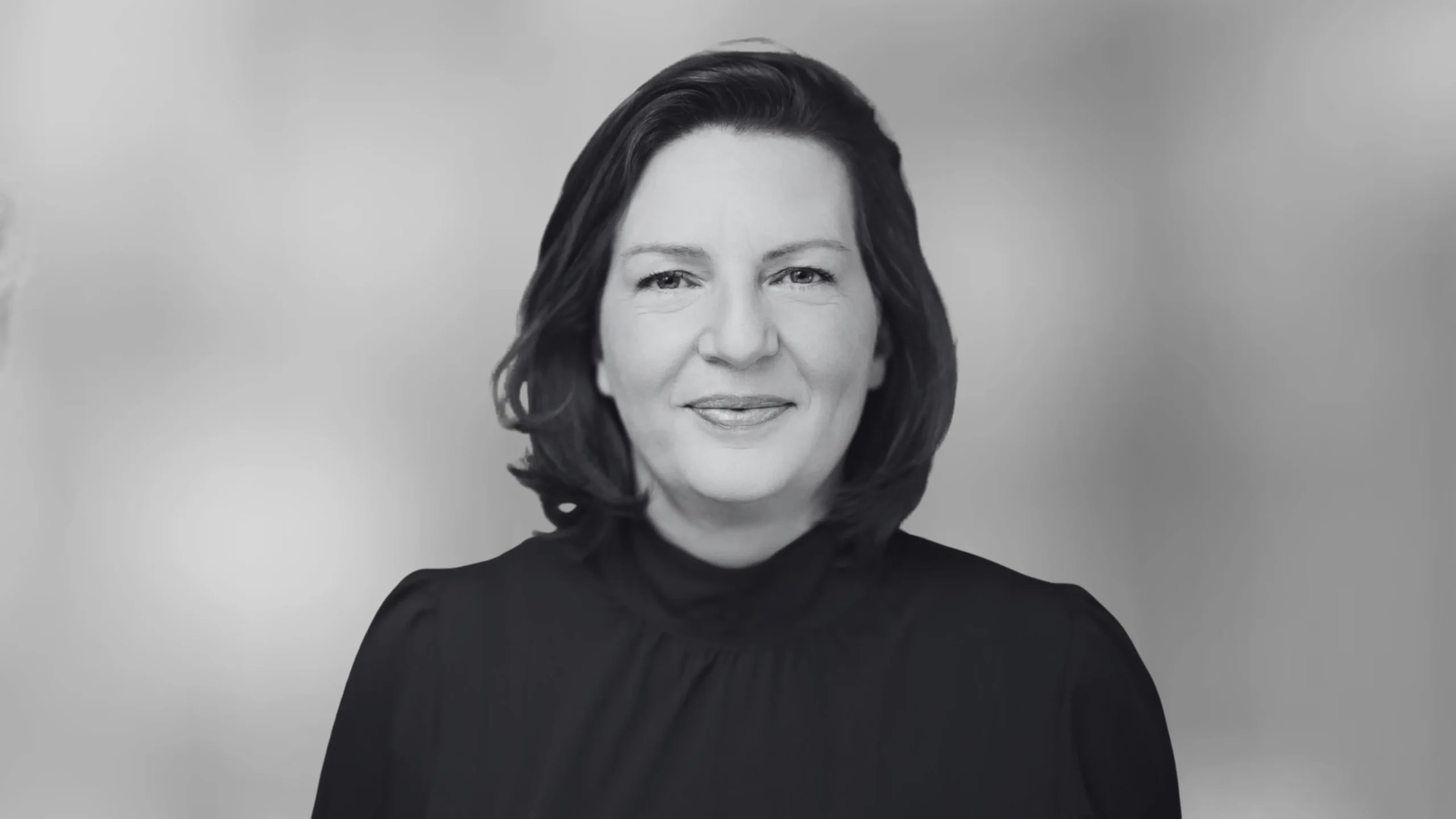
Constanze Buchheim
Founder & CEO of i-potentials / Executive Search & Leadership Advisor / Leadership Consultant to Government & Boards / Organisational Transformation Expert
What does leadership demand from us when status, competence and control are no longer enough? Constanze Buchheim is the founder and CEO of i-potentials, one of Germany's leading executive search and leadership advisory firms, where she works with senior executives, boards and public institutions on some of the most consequential leadership questions of our time. Yet her perspective is not shaped by proximity to power alone. It is also grounded in her own experience of responsibility, crisis, emotional growth and self-examination. This makes her an especially compelling voice on the inner dimension of leadership: what happens when the qualities that help us rise are no longer the qualities that help us lead well?
Connect & Learn More