Dr. Laurel Parnell
Why Talk Therapy Never Worked for You
Episode Summary
Traditional trauma therapy often focuses on distressing events, but many people suffer primarily from absence: they were never soothed, protected, understood, or loved in the ways they needed. Dr. Laurel Parnell explains how attachment-focused EMDR expands the standard protocol by creating safety first and helping clients develop internal nurturing figures, protectors, wise guides, and peaceful places. These imagined resources are not treated as fantasies to escape into, but as experiences that activate and strengthen underdeveloped capacities in the nervous system. Healing becomes both a release of the past and a developmental repair of what was missing.
Resources Mentioned
Books by Dr. Laurel Parnell
Laurel Parnell (00:00) Within a few seconds of the therapist moving her fingers in front of my eyes, and my following her eye movements, it went to a very early childhood memory I had of being abused by my father — of being terrorized. He wasn't abusing me at that point, but it was the threat of it. I was very small and I was absolutely terrified. My experience of this was something very different from years of psychodynamic psychotherapy, because I felt myself to be very small and I saw how big he was. My body went into this intense experience of rapid heart rate, sweating — that experience of terror. But it wasn't from an adult perspective experiencing this as a child. I was the child again. So I had what you call an abreaction, this very big emotional response, but at the same time I was in it, I was observing it. This is what is very interesting about EMDR.
Christopher Kabakis (01:36) Welcome everybody. It's my great pleasure to welcome today Dr. Laurel Parnell. Dr. Parnell, you are a real pioneer in the field of trauma healing, especially EMDR, and we will talk about that and what it means. You're also a clinical psychologist by training, and you've founded the Parnell Institute for attachment-focused EMDR. You're also the author of seven books, among others — "Transforming Trauma: EMDR," the first one, which was also translated into German; "Attachment-Focused EMDR: Healing Relational Trauma"; "Tapping In," which is about resources; "A Therapist's Guide to EMDR"; "Rewiring the Addicted Brain," a book about addiction and its power, which I also want to talk about today; and your latest book, just released two weeks ago, "Releasing What Isn't Yours." I hope we can speak about all of these things in the limited time we have. A very warm welcome, Dr. Parnell.
Laurel Parnell (02:40) It's my pleasure to be here with you.
Christopher Kabakis (02:42) Thank you. So my first question is: you've been working in trauma, in the field of trauma therapy and healing, for more than three decades. How did you get originally interested in this field, in trauma?
Laurel Parnell (02:45) My goodness. So really what I've been involved with, I think, is the integration of psychology and spirituality my entire career, because I've been a longtime Buddhist practitioner, beginning meditation back in high school when I was just seventeen, eighteen. And because I'm really interested in the way the mind works, the way the body works, and all of those things, that really brought me to psychology and psychotherapy. And you cannot work in clinics like I did without working in trauma, because it's right there. So always, from the very beginning, as I was working in internships, I was working with traumatized people — children who had been abused, then later adults who were abused in childhood. So trauma was always there. In those early days — I'm talking about the early eighties — there was very little out there about trauma and how to treat it. My doctoral dissertation was about battering couples, couples who have these cycles of violence. I was very curious about why women go back to a battering situation when they have the financial means to leave, and I was looking at what I call psychological fusion, this enmeshment with a loss of self in the relationship. So I've always been very interested in this, not because I was coming to it from an outside place — it's more that this is what was showing up clinically all the time. In the eighties we had the term PTSD; I remember there were Vietnam veterans in the clinic, and there were people with childhood abuse in their histories, but there wasn't much we could do except talk. Then I was trained by Francine Shapiro in nineteen ninety-one, and I was actually introduced to EMDR by a colleague at a meditation and yoga retreat, taught by my spiritual teacher, Jean Klein. I was introduced to EMDR by a colleague at that retreat who was describing it, saying, "This is the greatest thing, my clients are moving" — from psychological memory to objective memory, as she put it. Psychological memory, according to Jean Klein, is memory that feels self-referential — "this happened to me," it feels very alive, you feel very connected to it. Objective memory is memory that doesn't feel connected to you personally; it happened, there's often a kind of global view of what happened, you see yourself as part of a greater whole, and it doesn't have that personal self-definition at all. So she was saying EMDR was shifting people from psychological to objective memory. I thought that was really interesting, but I wasn't about to sign up for it, because it sounded like this very strange thing — waving your fingers in front of somebody's eyes. I was psychodynamically trained, and I was also trained at the Jung Institute of San Francisco, so I had a transpersonal, Jungian, psychodynamic background. Anyway, there was a man behaving very bizarrely at our meditation retreat — this was a meditation and yoga retreat where we were working with the energy body, very slow-moving, very silent — and he was jumping up and down, taking his clothes off, acting bizarrely. I thought he was decompensating and would need to leave. What happened was my friend Garnita worked with him using EMDR. The next day he was back with the group, completely normal, functioning — it was astonishing. So my friend Richard and I, who'd both been with her at lunch, both signed up for the EMDR training. The first EMDR training was in 1990; this was 1991, so very early days — there was very little research on it. What I experienced was very powerful in the training itself. Francine Shapiro herself wasn't a very experienced clinician, because she was a graduate student when she discovered EMDR, but she'd found the power of eye movements, of bilateral stimulation. I was hearing her theory — she was a very left-brain-oriented person — but what was powerful for me was the practicum. You choose something that isn't so disturbing to practice this. I picked a memory of being humiliated by a mean teacher when I was about ten — he called me into his classroom, not even my class, and accused me of something I didn't do. It was shame and humiliation, so I thought, okay, this isn't so disturbing. Within a few seconds of the therapist moving her fingers in front of my eyes, following her eye movements, it went to that very early childhood memory of being abused, of being terrorized by my father. And I had this abreaction, this big emotional response, but at the same time I was observing it — you have a dual focus of awareness, you're in it and you're observing it. It was very intense, very physiological, very somatic, and I thought, this is really interesting, I've never had this before. Then you process through this big wave, it goes up and then down, and at the end it feels like it's in the past. That experience of it moving from psychological to objective memory was very powerful — I felt the shift leave my body. The next practice I did another one with my father, and again it moved out. What was very interesting was that right after this training, I was seeing my father for the first time in five years — it was his birthday — and I thought, I'll get to test the work, see if I feel different. I felt completely different when I saw him. I hadn't even realized I'd been afraid of him as an adult, because what I would do was engage him intellectually as a defense against the fear I was carrying as a child. What I felt instead was myself, as an adult, meeting another adult — a contemporary experience of my father. It was great, I felt this softness; he wasn't the same person he was when I was growing up, he was very different. But when you're carrying childhood traumas in your nervous system, what gets activated is the feeling that it's happening again, even if it's unconscious. So the defense I'd needed before was no longer needed — I could relate to him adult to adult. That was my introduction to EMDR, and I thought this stuff is amazing. I continued in my own EMDR therapy, then continued in the training and became a facilitator, a consultant, then a trainer. I've been practicing this since nineteen ninety-one.
Christopher Kabakis (11:08) Well — now we've jumped right in. Just for our listeners who haven't heard about EMDR, could you say what the four letters stand for?
Laurel Parnell (11:31) Yes, so EMDR stands for eye movement desensitization and reprocessing. I can give you a bit of an overview of what it is and how it works — would that be helpful?
Christopher Kabakis (11:37) Exactly. And before we do that — some of our listeners might be entrepreneurs and leaders in organizations, and they might think, well, isn't trauma a big word? Maybe it applies only to war veterans, or people who were victims of car accidents. And what you just shared about your own personal experience already points to the fact that we all might carry certain kinds of traces of overwhelming experiences, because your childhood experience is such an experience. Could you talk a bit more about how we can think about trauma, and to whom it applies, before we move on?
Laurel Parnell (12:22) Right, right. And I would say the term trauma has been used way too much for things that really aren't trauma in the same sense. But what I will say is we can talk about large and small T traumas — I think that's helpful. The large-T traumas are the ones that lead to the symptoms of post-traumatic stress disorder — car accidents, assaults, these overwhelming experiences that create a sense of "I'm going to die." The symptoms that come from these experiences are nightmares, flashbacks, hypervigilance, anxiety, trouble sleeping — and they impact relationships down the line. So those are the big-T traumas, and EMDR has so much research — it's one of the most researched therapies for PTSD, for these big-T traumas. But we also have small-T traumas — the kinds of experiences we all have that impact our sense of self-efficacy, who we are. They can be humiliations, shamings, bullying; for our LGBT folks, it can be the kind of harm from people rejecting you, not being loved or cared for. It can be so many things that impact how you view yourself, so that you're not living fully. What we find with EMDR is when we do what we call targeting — going in on the image, the emotion, the body sensations, and the beliefs that got set in at the time of the trauma — and then we add eye movements, or other forms of bilateral stimulation. In the early days of EMDR it was all eye movements — that's why it's called eye movement desensitization and reprocessing. But we found some people cannot move their eyes back and forth, because of eye injuries, or they get hypnotized, or they have seizures — they just can't do it. We found other forms of bilateral stimulation work just as well — tapping on either arm, tapping on the sides of the legs, auditory stimulation, all kinds of forms. I haven't used eye movements in well over twenty years.
Christopher Kabakis (14:58) Really? Okay.
Laurel Parnell (14:59) Because nobody wanted to use it. When I was able to introduce other forms of bilateral stimulation, nobody wanted to do eye movements anymore.
Christopher Kabakis (15:08) Fascinating. So the eye movement — you've already shown it several times — it would be like moving the fingers slowly from one side to the other, and the patient...?
Laurel Parnell (15:18) So the eyes move from far right to far left, back and forth. As you're focusing on the trauma experience that's locked in the nervous system, the eyes are moving right, left, right, left — or you're tapping right, left, right, left — or you've got these little devices that buzz, that vibrate in the hands, or auditory stimulation making a beeping sound. You can passively receive this — you don't have to be doing eye exercises, which I'll tell you is very hard. A lot of people cry very hard, and if they're crying you have to keep their eyes moving through the tears — it's very embarrassing to be looking at somebody crying and telling them, "keep your eyes going." So you can close your eyes and passively receive the bilateral stimulation if you're holding these little buzzy things.
Christopher Kabakis (16:16) And just one question — bilateral stimulation really means we try to stimulate the two brain hemispheres, one after the other, moving between them. How does it work, and what do we know about why this has such a powerful effect on trauma resolution?
Laurel Parnell (16:16) We don't really know, and that's what's interesting about it — we know it works because we have pre- and post-measurements. There are different theories looking at different brain changes. Before EMDR, the right hemisphere is activated; after EMDR, both hemispheres and the frontal lobes are activated — so it's changing the brain. One theory is that it's like REM sleep, dream sleep — when we're dreaming our brain is rapidly processing information and our eyes are moving very rapidly. Another theory has to do with rhythm — cultures all over the world use drumming, dancing, and rhythm; when a baby's upset, you pat the baby, you rock the baby. There's something inherently comforting about rhythm. Bruce Perry's theory was that when a baby is developing in utero, it's hearing the beat of the mother's heart, so comfort and rhythm get hardwired into the developing nervous system as something comforting. So what we do with EMDR is activate the trauma response, the sympathetic nervous system, and then pair it with a calming response — the rhythm — and that short-circuits the trauma response; you can't have both at the same time. That may be what's happening with the desensitization part. But that doesn't explain the rapid processing, because what happens with EMDR is you get very rapid processing of information — thoughts, feelings, body sensations, new memories, all kinds of spiritual material that isn't explained just by something calming the nervous system. You get a calming, a kind of desensitization, but also a reprocessing with new information coming in, and this bigger perspective arriving. And the other thing they don't tell you in most trainings is that people experience altered states of consciousness — it opens people to all kinds of other things. Angelic beings may show up, after-death communications happen, people who've had near-death experiences have their spirit or soul come back in — there are just so many of these altered states. It seems to open a portal to other states of consciousness, like lucid dreaming — I think EMDR in some cases is very much like lucid dreaming, like some of the psychedelic work. But what's happening with EMDR is you're in a conscious waking state at the same time you're experiencing altered states — you're very controlled, and you're having these powerful experiences. Cultures all over the planet, for thousands of years, have used drumming and dancing as a way of processing trauma — the indigenous peoples of the Americas have used rattling, drumming, and dancing for warriors after war, as a way of healing trauma. And everywhere you go across the planet, it's the same — in Africa, obviously, they do that too. But these technologies have been lost through colonization — people came in and said, no, no, you need to do cognitive therapy.
Christopher Kabakis (20:08) Or take drugs — like, I mean medicine drugs — no, pharmaceutical drugs, maybe.
Laurel Parnell (20:30) Whatever — they're old, and actually some of them work pretty darn well. So anyway, that's a little bit about some of what might be going on here. I think there are multiple things going on.
Christopher Kabakis (20:35) Yes — one reason we invited you is that you're an expert in altered states through EMDR-based work. We also do darkness work, psychedelic-assisted work, and breathwork, but EMDR is really a mind technology I don't know much about, so it's great to hear from you how it works, and that rhythm is so important there. It connects very much to what our tribe and group have been talking a lot about — Ian McGilchrist's work on the two brain hemispheres, and the urgent need for some rebalancing or integration between them. What you just shared is that this hemispheric integration or reconnection, possible under these states of bilateral stimulation, is what yields such a tremendous effect of processing, of release, and then of memory — because there's validation afterwards, right? You process, and then a new memory forms, and you emerge as someone with a different view of themselves, or of the events that happened.
Laurel Parnell (21:49) Yeah, I think very much so. I think EMDR is profoundly integrative — I think this is what we're looking at. Trauma is stored on the right side of the brain and is left in fragmented form; we don't have access to language from the traumatized experience. So therapies that are language-dependent are not integrating. What we find with EMDR — and Daniel Siegel speaks a lot about this — is that it does horizontal and vertical integration: it integrates left and right hemispheres, base brain, mid-brain, and frontal lobes. It's profoundly integrative. Pre-EMDR, the person doesn't have the narrative — everything's very fragmented, Broca's area has been shut down. After EMDR, they can tell you what happened — they have language, they have the narrative. But prior, it's all fragmented. So this is where so many language-dependent therapies — the cognitive therapies, even some of the somatic therapies that don't integrate all the different parts — are missing something.
Christopher Kabakis (22:44) Yes — and what also spoke to me a lot is the importance of dual awareness. I'm training in my third year in somatic experiencing, and there's the crucial role of the present self that witnesses the embodied sensations that manifest when we touch the trauma energy, the survival energy stored in the trauma — the residual, accumulated stress, as Peter Levine calls it, I think. This combination of having your adult, mature, higher awareness stay present within the charged material is when things can move. And I want to bring this now to the element we haven't mentioned yet — you upgraded the original EMDR protocol in your work, and you call it attachment-focused EMDR. Could you talk about this relationship with yourself and with the therapist, and why you think we're missing something crucial if we just follow a technical protocol of EMDR?
Laurel Parnell (23:50) Yeah, let me explain a few other things. EMDR, quickly defined: we activate the memory network where the trauma is stored, then add alternating bilateral stimulation, and that sets off this rapid processing effect — thoughts, feelings, body sensations, it moves, we call it accelerated information processing. It's a paradigm shift because it moves so fast. In order to do EMDR, the person has to be stable enough — they have to have affect tolerance, and what I'll call comfort with affect. In some cultures the person may have the affect tolerance, meaning their system can handle it, but it's not culturally comfortable — I work in Singapore, with Asians a lot, and it's not culturally comfortable to have strong emotions. They have to be willing to think and feel uncomfortable things, maybe even about family members that may not be culturally okay. EMDR works on what we call activated memory networks — you have to have something activated: you were hurt, bullied, shamed, maybe really bad things happened. There's an image, emotions, body sensations, and old beliefs frozen at the time — all of that's activated. But what do you do if the main problem is something they didn't get? They were never loved, never held, never comforted — maybe their parents were traumatized by war, maybe their parents never got that from their own parents, maybe there was severe neglect. What's predominant is the absence of. The other element of EMDR I really emphasize is what we call resource tapping — in standard EMDR they call it resource installation, a term I don't like because it doesn't really explain what it is. Resource tapping is the use of imagination to light up resources that are within you. A typical one is the peaceful place — can you imagine a place that's peaceful and calm, where you feel relaxed? Standard EMDR calls it the safe place, but I've found "safe" is a very triggering word for somebody who hasn't been safe — standard EMDR says you can't do it if they can't find a safe place, and my experience is, nonsense, we just have to find imagery that will calm the nervous system down, without the word safe, because immediately people think, unsafe, there isn't safety in the world. So let's say it's a beautiful mountain lake, and they feel really calm — and then we add a short amount of bilateral stimulation. With the resources, we're looking for imagery that will calm the nervous system down, or provide what we need — if it's peacefulness, we look for imagery that represents that, we activate it. When you imagine something, it's lighting up neural networks in the nervous system, and then a short amount of bilateral stimulation links it up — light it up, then link it up. In what I call attachment-focused EMDR, we use four foundational resources before we work with anybody. Peaceful place. Nurturing figures — real or imaginary, kind, caring, loving; it can be someone they know, someone from a movie or book, a spiritual figure, an animal. Many people with significant trauma pick an animal, a mother bear, for example. We make a list of these figures, and once you have one well imagined and can feel the quality, we tap — six to twelve, right, left, right, left, or keep going as long as it feels positive, only positive; if it shifts into negative, like they're starting to process into trauma, we stop right away and go back to fully positive. Then protector figures — real or imaginary, that will defend you, protect you; it could be an animal like a tiger, someone they know, a superhero from a movie. They imagine the figure, feel the quality inside themselves, and we tap to link it up and strengthen it. And the last of the four is the wise figure, representing wisdom — could be a spiritual figure, could be more than one — and we tap that in too. This is their team. For attachment-focused EMDR, we emphasize resourcing before any trauma processing — creating a sense of safety before we go in. Going back to this idea of what's missing — for somebody who's never had loving parents, we create them in imagination: create an ideal mother, the mother you wish you had, kind, caring, nurturing — imagine her, tap her in. We create whatever they need to redo their development — a loving family, a family that accepts them for who they are; if they're gay and had rejection in the family, maybe we create two accepting dads who'll help them get through school. Whatever they need, we create it in imagination so they get a good felt sense of it, and through imagination and bilateral stimulation we fill in what they need. With attachment-focused EMDR we have five basic principles: we create safety, including the resourcing; it's client-centered, tailored to the needs of the individual; the therapeutic relationship is foundational — we don't just do "one, two, three, six sessions and you're better" — for anybody with early childhood trauma, or who doesn't feel safe with a stranger, we take the time to build a therapeutic relationship so they feel cared for and connected, which is reparative in itself; we use resourcing to create safety and do developmental repair; and we modify the standard EMDR protocol. The standard protocol was developed in the 1980s by Francine, for her doctoral dissertation, and it's been frozen since then — there's been a need to evolve it. I've evolved it, simplified it, streamlined it — got rid of a bunch of the numbers and scales, but it still has the same basic structure, because I really like that structure: you're not just free-associating all over, you come back, finish something, the therapist is out of the way, trusting the wisdom within the client. But I've made it much more client-centered. That's what I call attachment-focused EMDR.
Christopher Kabakis (31:44) Yeah, wonderful — this is so rich as a methodology, and I see so many relationships to other things I've come across over the years. For example, the therapeutic relationship, or therapeutic alliance, is so important — when studies were done on the efficacy of certain methods, what they found in the end was that it doesn't really matter so much which method is used, it's very much about the therapeutic relationship. Which is confounding for people who think it's the methods that are effective — I do think methods matter, some are more effective than others, but the therapeutic relationship was often found to be so important. And what you just shared is that knowing about things is just part of it — sometimes we don't even know about it, because it's very early, or because, as you said, we don't know what we're missing since we've never experienced it. In Hakomi it's called the "missing experience" too, and what you described is the corrective experience — having the nourishment you never got — and then the felt sense, as Eugene Gendlin called it, the embodied sensation of something. Many people know "yes, my parents weren't so loving, now I have a partner who is very loving, but it doesn't get in" — they don't know how to let it in, the love is already there, they know that, but they can't change it. I'd expect and hope that methods like attachment-focused EMDR, and other somatic approaches like somatic experiencing and NARM, can really help with that — having a new emotional and relational reference experience that can be profoundly healing. Would you agree this is similar, in that way, to body-oriented and mindfulness-based modalities?
Laurel Parnell (33:35) Yeah, but it's much faster — there's something about the bilateral stimulation that just makes it go way faster. When you talk about the blocking — say you have somebody with cold, unloving parents, who has a really loving partner but is blocking it — I'm going to ask, okay, what's that about, and use what we call the bridging technique, to go back in time and see what it's linked to. Because it may be linked to a belief — "I'm not lovable," "I don't deserve love," "I'm not good enough" — and there may be an experience attached to that, which becomes an entryway to doing the EMDR. Interestingly, there was a man — this takes us right into the transpersonal — who had this block, couldn't connect to life fully. It was hard to say what it was, but when I asked for an example, he said, "My girlfriend tells me how much she loves me, and I just can't take it in." I said, okay, let's go into that, connect to it, feel it — it's not safe, can't take it in — trace it back in time. So we did the bridging technique and went back in time, and he went back to a past life. He's now four years old, about to be killed in a concentration camp in Germany — this is a guy who's not Jewish, doesn't have any of this in his history. He's four years old, about to be killed, and he feels unloved and uncared for. We go in and process this, target it with EMDR, and it completely resolves — he has a spiritual experience. Then we go back to where we began, and his heart is open, and he can accept the love. So sometimes, if the therapist is open, we end up in a past life, or in the womb, or somewhere — I don't have to interpret it, I just go with what has come up for the client. We have the image, the emotion, the body sensations, and the beliefs, it's very charged, we've got an entry point for EMDR, and we process it. I've had many of these that go right back to past lives the client believes are past lives — I'm not looking for it, it's just what arises, and then we work with it.
Christopher Kabakis (37:49) Yeah, I think this is really fascinating. But of course, some people who grew up in a Western tradition of individualistic materialism would say, "that can't be true — how could you have experiences of past lives? Your life only starts in the womb," they'd concede that much, "and then after birth." So how could that happen? I think, in the tradition of William James, of pragmatism, you'd say we don't need to make any statement about whether it's true or not — if it helps the client, if he's brought back to that place, and that memory and release and processing happens, and afterwards he or she feels better and something has changed, we don't even need to know if it's true. But it is a very interesting question, how people have access to experiences from the collective, or intergenerational ones — and in the psychedelic-assisted inner work we facilitate, these things come up too. Sometimes it doesn't feel like your own personal experience — it feels like the experience of someone else, an ancestor, or something collective.
Laurel Parnell (37:50) Well, this is where I'm just going to talk about all of this, because it's really interesting to me. Sometimes what's attached to you isn't yours — it could be a spirit or a soul attached to you, living connected to you maybe your whole life, imparting information that feels like it's yours because it's impacting your life. I wrote about this in "Releasing What Isn't Yours" — how to assess spirit or soul attachment and how to release it. Some of what I've worked with over the years, as if they were past-life experiences — they were past-life experiences, but may not have been the client's past life; it may have been the past life of a being attached to my client. This man I described — it may have been his past life, or it may have been a child who had died and attached to him. Either way, his symptoms went away, so I'm always looking at relieving the symptoms of the client I'm working with, however that is. There was a woman who'd done holotropic breathwork — a German woman who'd been in America for years — and in the middle of a holotropic breathwork group she had a very powerful experience that felt like a past life of being attacked and gang-raped by a group of men in a forest, running, wearing clothing not of this time. She stopped the breathwork because this horrific thing was coming for her, but as a result she developed symptoms of PTSD — afraid of men, anxiety she'd never had before — none of it pre-existing before the holotropic breathwork. So in my questioning, I asked when this began, whether she had symptoms prior — never before. I figured it began because of something in the breathwork that set it off. In our EMDR work we went in on the trauma picture from that work — the attack — and processed it very much like any other EMDR: imagery came in, she did repair, fought, did really good work, and came to a positive resolution — we installed the positive cognition, and her symptoms went away. So was this her experience, or someone else's? At first I thought it was a past-life experience evoked in the breathwork. Now I think it wasn't her experience — I think she picked up something from someone else in her breathwork group. That's the other thing that can happen in these groups — other people's stuff can get lit up, and leave them, and end up sticking to somebody else in the group. It felt like it was hers, but it wasn't, and the reason I don't think it was hers is that she never had these symptoms before.
Christopher Kabakis (42:28) This is a very important point — for people to contextualize: traditionally you'd think of these as introjects. I can take on things that aren't mine — a parent tells me "you are a bad girl," or "you're evil," and I absorb this message, this energy too, and it gets stuck in me, but it doesn't actually belong to me. In therapeutic work you'd try to get the introject out and release it. Now you're saying this extends to things that may not be ours at all — not from our personal biographical experience, but from past lives, or from other people in the same space. And this always raises the question of ontology — what do we think is the nature of reality? You mentioned Dan Siegel, who says the mind is not just in the brain, it's in the whole body, and it's also between us — a flow of energy and information that organizes itself. If the mind is something like that, we can be deeply affected by what's happening around us. In an altered state, like holotropic breathwork or a psychedelic experience, we open up much more — the filters are removed, so we access more of reality. But then what you're suggesting is that if it opens us up to more of the reality around us, the people, they might have stuff, and we might open up to that too — and somehow it gets attached to us, becomes part of our system. And then this needs to be worked on therapeutically again.
Laurel Parnell (43:33) Well, this is a lot of what my newest book is about — "Releasing What Isn't Yours: Living from Your True Self through Multidimensional Integrative Healing." This is why so much of our view as psychotherapists is that all your symptoms, everything, is from your history. Well, not necessarily. Some of this comes through the lineage and our ancestries. Some of it we're picking up from all over the place — some people are much more sensitive to that. And some people are even picking up spirits or souls that don't belong to us — I think some people are just more sensitive to picking things up like that. In IFS they talk about these as "unattached burdens," something like that — I don't like calling these beings burdens, I just think of them as energies, and typically they're looking for help, looking for someone who can help them. I think you're right that in these open states, with psychedelics or with EMDR, often these portals, these boundaries, are opened up, and it's an invitation for things to attach — and some people have just always been more sensitive to this.
Christopher Kabakis (44:38) Yes, but it also points to the importance of the right set and setting, especially for group-based experiences — that the space is held clean and with integrity, that you protect the experience as much as you can, create a safe container. Then maybe the risk of those bad energies getting exchanged, or coming into the space, is reduced if the space is well held and supported. As you mentioned, you work with the nurturing part, the protective part, the wise part, and the safe place — and the guides or facilitators in a psychedelic space are the protective figures who shield the space from stuff from the outside, while the nurturing helps support people in their individual processes, and hopefully we bring wisdom too. But safety, definitely — so you have the right conditions for good processes to happen. I don't know if there's still a risk that stuff that shouldn't be attached to people gets attached anyway — I don't know if you have a theory about under which conditions this is more likely to happen.
Laurel Parnell (46:05) Well, I think this is where, in indigenous cultures all over the planet, they do cleansing rituals before any kind of work like this. I think there needs to be real energetic cleansing of the space itself and of the individuals — that may mean individual work done before they come into a session, releasing early childhood traumas, or anything sticking to them, before they go in. This is again in "Releasing What Isn't Yours" — a whole part of the book is on resourcing and energetic sovereignty, methods for developing it. We talk about the energy bubble, and the grounding cord — ways to examine whether energies that don't belong to you are in your bubble, and ways to release them; working with energetic cords, releasing cords you don't want attached, maybe negative ancestry; cords you do want; what we call the energetic containment room, where you consciously set aside things you don't want in your work at all — not dissociating them, consciously setting them aside — and then calling in the resources. I think it's important for individuals to find their own resources — their own wise figures, their own spiritual resources that can support them in the work before going in — tapping them in, really feeling them, and especially making a very clear intention about what the work is for. My spiritual mentor, Jean Schneider, who I've been working with for six years now on what I call multidimensional integrative healing, said it's so important in this psychedelic work to have a very specific intention, and not have it too broad.
Christopher Kabakis (48:05) You've been emphasizing the intentionality, the importance of working with intentions, and also approaching the whole endeavor with humility — not thinking that you, as a facilitator, are the big protector or savior — and to work with resources beforehand. We often have one-on-ones before the ceremony and afterwards, where we try to activate — talking with people about their resources, thinking about people in their lives that they love or that love them, so they can activate those memories and take this with them into the experience.
Laurel Parnell (48:46) I would ask which figures would be helpful to bring in with them more specifically. And I would avoid family members.
Laurel Parnell (48:58) Completely — they're too complicated. You bring in a family member and suddenly you've got their stuff, or memories of when they were disappointing to you.
Christopher Kabakis (49:08) Okay, wonderful. One last thing I wanted to touch on — you've written about addiction as well. Some people have a misconception about what addiction is, and even see it as a moral failure, and don't recognize that addictive patterns can often have trauma at their source. Could you speak a bit about that? Especially because people don't always recognize the trauma symptoms — working a lot, being perfectionist, being control-oriented, or avoiding certain relationships — those are also symptoms of trauma; workaholics, and others, could be considered addicts too. So I hope it's relevant not just for people with a clinical, therapeutic case of addiction with substances like heroin, but also usual alcohol consumption that's daily, or work- or control-related behavior. Could you tell us more about this?
Laurel Parnell (50:11) Yeah, let's broaden our definition — let's look at those small-T traumas. Not necessarily the big stuff, though often people who've had the big stuff turn to a substance to deal with it. I'm always looking at what this is serving for you, how it's helping you — is it because you feel anxious or uncomfortable, and it makes you feel less anxious? Is it because you feel shame, or embarrassed, or not good enough — where did that come from? And if we take this away from you, what's that going to do — now I'm going to feel too anxious, too exposed? So we can either go in on the traumas — small-T, large-T — and reprocess those, which can begin to unplug what's driving the behavior. Or we can bring in resources: can you think of a time you felt good about yourself, felt strong? Or, if it's anxiety, what resource would give you a sense of calm — imagine doing a sport activity you feel really good about, and then we add bilateral stimulation. So you can go the trauma route, looking at what in the past is linked to the driving need, or the resourcing route — bringing in what this is doing for you, and what would activate those same networks in your nervous system: calming, peace, confidence. You look at memories or experiences that represent that, activate them in imagination, and the bilateral stimulation links them in.
Christopher Kabakis (52:08) And would you say that social media addiction, scrolling all day, is also potentially an addiction — not just because it's purposefully designed to make you addicted by the companies, but also because it catches us in some kind of unprocessed, unmet need — these modern forms of addiction?
Laurel Parnell (52:28) Yeah, it absolutely could be. What I'd look at is: what would you feel if you stopped doing this? Anxious — "I don't know what to do with myself." Even imagining you can't have your phone for a day — what does that activate in you? If it's anxiety, what's that about? This is where the mindfulness inquiry is so important — bringing curiosity and inquiry instead of criticism. Rather than "I shouldn't be addicted to this," it's, okay, what's that about? What would happen if you didn't have your phone for a day? Let's explore what you'd feel — "I feel lost, I feel lonely" — okay, so what can we bring in through imagination, or what in the past is that linked to?
Christopher Kabakis (53:17) And you added before this fascinating option for people — because you said maybe the addiction is being driven by trauma energy, and people might say, "but I had a happy childhood, I don't have traumatic experiences." That might be because they've forgotten it, or pushed it away, suppressed it — but it might also be that the origin comes from somewhere else, possibly a previous life, or someone else. Probably most people haven't thought about that, so you'd only uncover it doing the work you do, or other somatic work.
Laurel Parnell (53:54) Well, I think what's important about what I call multidimensional integrative healing is that our lens has expanded to consider what this might be — it could be from personal history, from really early childhood things, from energies you're picking up, from ancestral stuff coming through. There are a lot of different possibilities, and I think when the therapist has an open mind and invites this kind of inquiry — and I'd also say we discount some of the small-T stuff: the bullying, the disrespect, the feeling like you don't fit, the mean teachers, the humiliations — these may not feel like traumas, but they impact our self-efficacy and how we view ourselves. So we make conclusions: "I'm stupid," "I'm not good enough," "I'm a disappointment," "I'm a failure." Certain self-constructs develop and get reinforced over time, feeling like "this is who I am" — and that's why I've got to work so hard to prove myself, because otherwise other people will see that I'm this failure.
Christopher Kabakis (55:07) Okay, Dr. Parnell — I think we've scratched only the surface, but in order to respect your time I'll end the conversation here. If people want to learn more about what you've shared, where would you point them?
Laurel Parnell (55:12) My website, ParnellEMDR.com. My books — "Releasing What Isn't Yours" just came out, and there's also an audio program. "Attachment-Focused EMDR" and "Tapping In" are for the general public, as is "Releasing What Isn't Yours." So check out our website and the other materials we have — I also have demonstration videos showing what the work looks like, which is really different. We have to evolve these things, and I'm excited about the evolution of the field right now — it's expanding, and our understanding of ways to help people is expanding. That's really exciting to me.
Christopher Kabakis (56:02) Yes, to me as well. I think progress is sometimes just unlearning old limitations — old habits, places you were not allowed to go. I think there's a lot of movement now, new openness for different kinds of modalities, and you've been really a pioneer in your field, bringing so many things together to create something really special. And, as you shared, very fast — you don't need ten or twenty years of talk-based therapy; there are more focused, faster approaches, if the conditions are right, with all the things you mentioned needing to be there for a really impactful and lasting effect. So thank you for the work you're doing, thank you for sharing today these glimpses into this realm of trauma healing — I hope people found something interesting here. I'm sure at one point we'll continue the conversation. Thank you very much.
Laurel Parnell (56:57) My pleasure. This has been a delight. Thank you.
About this Guest
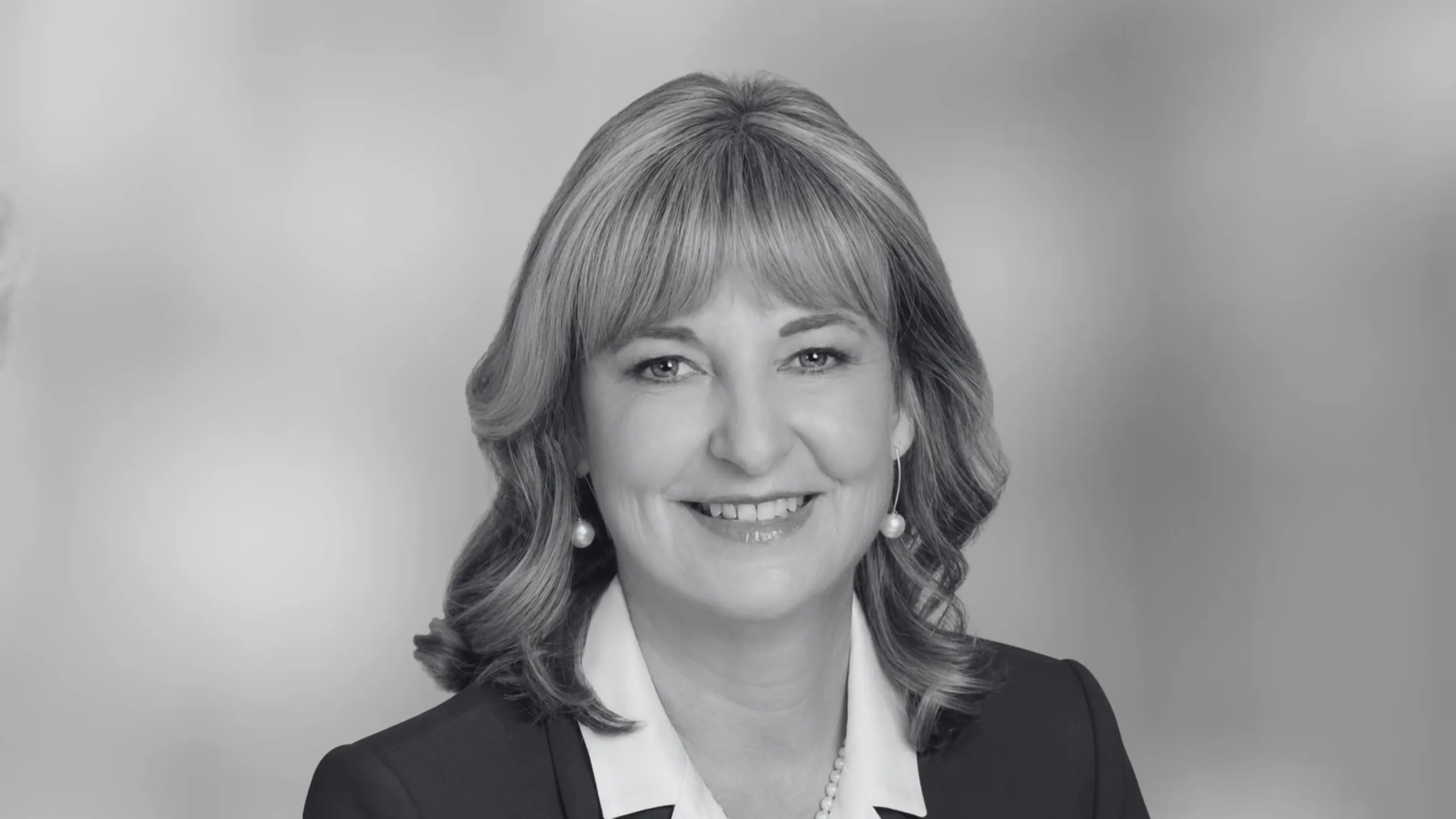
Dr. Laurel Parnell
Pioneer of Attachment-Focused EMDR / Clinical Psychologist & Trauma Specialist / Founder of the Parnell Institute / Author & International EMDR Trainer
What happens when the deepest wound is not something that happened to us, but something essential we never received? Dr. Laurel Parnell is one of the pioneering figures in trauma therapy and the creator of attachment-focused EMDR — an approach that moves beyond a standardised protocol to explore how imagination, relationship and bilateral stimulation may help restore experiences of safety, protection and care. After more than three decades at the forefront of the field, her work invites us to reconsider not only how trauma is processed, but how the nervous system can begin to receive what was missing.
Connect & Learn More
Books by Dr. Laurel Parnell